
Aruba vs. Turks & Caicos: Which Caribbean Island Is Right for You?
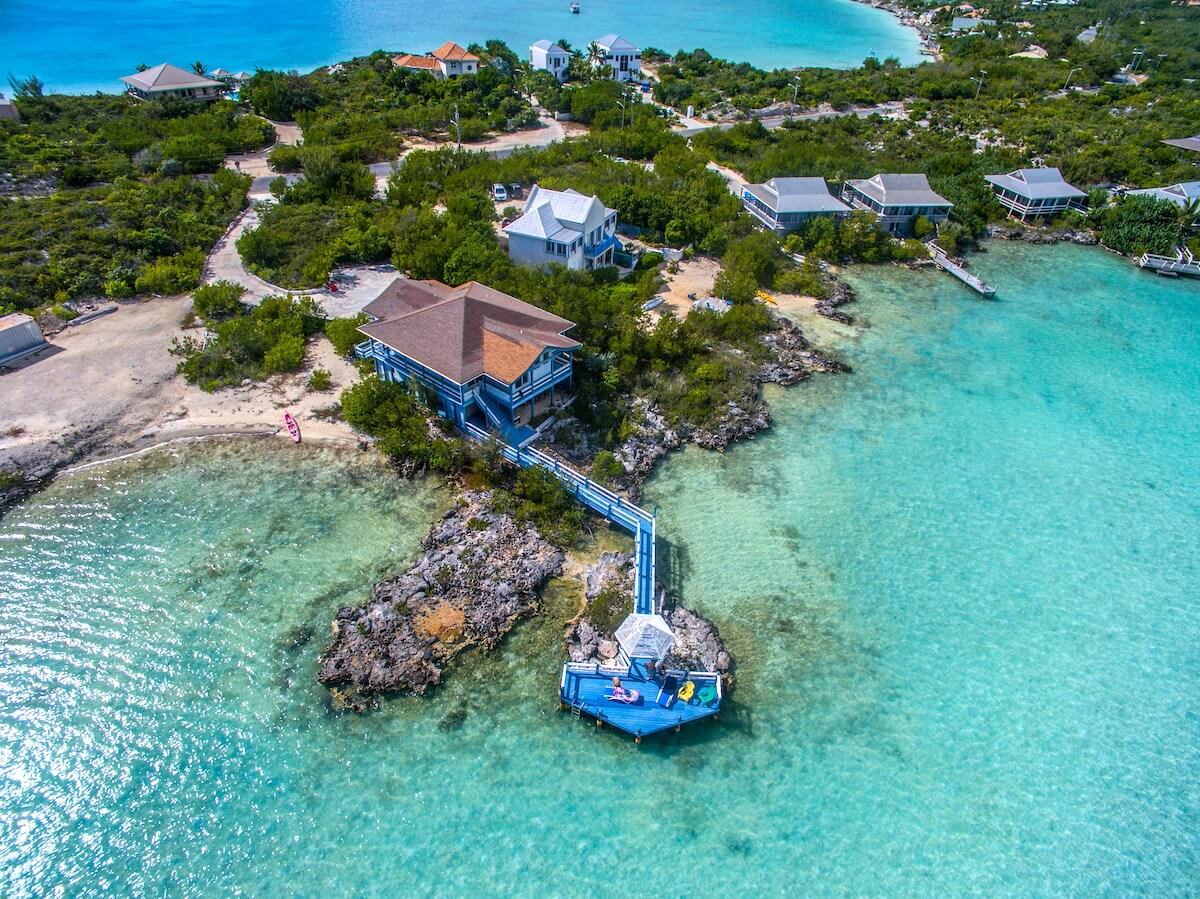
Grace Bay vs. Eagle Beach. Two of the Caribbean’s most celebrated beach destinations, compared honestly across every category that matters.
When people argue about the Caribbean’s best beaches, two names come up over and over again: Grace Bay Beach in Turks and Caicos, and Eagle Beach in Aruba. Both are consistently ranked among the finest in the world. Both have the kind of water (calm, impossibly clear, turquoise) that looks too good to be real. Both attract a well-traveled, often luxury-oriented crowd. And both deliver a genuinely excellent Caribbean vacation.
So which one should you choose?
The beaches may be comparable, but the two destinations are not identical, and the differences matter more than most comparison articles let on. Cost, safety, weather, activities, and overall value all tell a more nuanced story. This guide breaks down Aruba vs. Turks and Caicos across every category so you can make the decision with confidence.
Disclosure: Some of the links below may be affiliate links. At no additional cost to you, we may earn a small commission if you make a purchase.
Aruba vs. Turks and Caicos: At a Glance
| Category | Aruba | Turks & Caicos |
|---|---|---|
| Location | Southern Caribbean (ABC Islands) | Atlantic Ocean, north of Hispaniola |
| Main Island | Aruba (single island) | Providenciales (“Provo”) |
| Size | 69.1 sq miles | 430 sq miles (across 40 islands and cays) |
| Government | Constituent country of the Netherlands | British Overseas Territory |
| Language | Papiamento, Dutch, English, Spanish | English |
| Currency | Aruban Florin (USD widely accepted) | US Dollar |
| Hurricane Risk | Very low (outside the hurricane belt) | Moderate to high (inside the hurricane belt) |
| US Travel Advisory | Level 1 — Exercise Normal Precautions | Level 2 — Exercise Increased Caution |
| Avg. Hotel/Night (mid-range) | $300–$500 | $588–$1,161 (peak season avg.) |
| Best-Known Beach | Eagle Beach | Grace Bay Beach |
| Best For | Value, variety, weather reliability | Pure beach luxury, diving, snorkeling |
Location & Getting There
Where is Turks and Caicos?
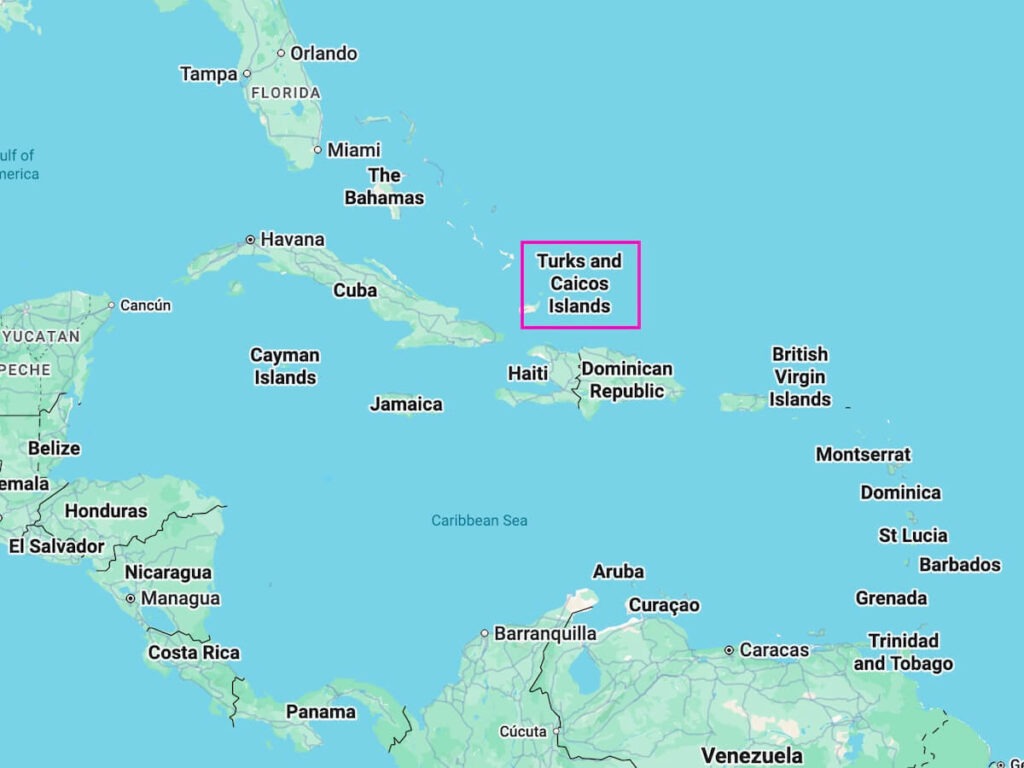
Turks and Caicos is a British Overseas Territory made up of more than 40 islands and cays in the Atlantic Ocean, sitting just north of Hispaniola (Haiti and the Dominican Republic) and about 575 miles southeast of Miami. Despite the “Caribbean” association most travelers make, Turks and Caicos technically sits in the Atlantic… though the water, weather, and vibe are unmistakably Caribbean in character.
The main tourist island is Providenciales (universally called “Provo”), home to Grace Bay Beach, the majority of the resorts, restaurants, and activity operators, and the main international airport. The other inhabited islands, Grand Turk (the capital), North Caicos, Middle Caicos, South Caicos, Salt Cay, and Cayman Brac, offer a more remote experience with far less infrastructure.

Where is Aruba in Relation to Turks and Caicos?
Aruba sits approximately 1,400 miles to the southeast of Turks and Caicos, off the coast of Venezuela in the southern Caribbean. The two islands are in completely different parts of the region, which is the main reason their weather profiles and hurricane risks differ so dramatically.
| Aruba | Turks & Caicos | |
|---|---|---|
| Region | Southern Caribbean | Atlantic / Northern Caribbean |
| Nearest Mainland | Venezuela (17 miles) | Cuba / Hispaniola (~100 miles) |
| Distance from Miami | ~1,500 miles | ~575 miles |
| Distance from Each Other | ~1,400 miles apart | — |
How Far is Turks and Caicos from Major US Cities?
Turks and Caicos is one of the more accessible Caribbean destinations for East Coast US travelers. The main airport is Providenciales International Airport (PLS).
| Departure City | Approx. Flight Time | Direct Flights? |
|---|---|---|
| Miami, FL | ~1.5 hours | Yes |
| Atlanta, GA | ~2.5 hours | Yes |
| New York (JFK/EWR) | ~3.5 hours | Yes |
| Boston, MA | ~3.5 hours | Yes |
| Charlotte, NC | ~3 hours | Yes |
| Houston, TX | ~3.5 hours | Yes |
| Chicago, IL | ~4 hours | Yes |
| Dallas, TX | ~3.5 hours | Yes |
How Far is Aruba from Major US Cities?
| Departure City | Approx. Flight Time | Direct Flights? |
|---|---|---|
| Miami, FL | ~3 hours | Yes |
| Atlanta, GA | ~4 hours | Yes |
| New York (JFK/EWR) | ~4.5 hours | Yes |
| Boston, MA | ~5 hours | Yes |
| Charlotte, NC | ~4 hours | Yes |
| Houston, TX | ~4.5 hours | Yes |
| Chicago, IL | ~5.5 hours | Yes |
| Dallas, TX | ~4.5 hours | Yes |
Practical note: Turks and Caicos has a clear proximity advantage… particularly for Florida, Southeast, and Northeast US travelers, often by 1.5 to 2 hours of flight time.
On the return journey, Aruba offers US Customs pre-clearance at Queen Beatrix Airport, meaning you land in the US as a domestic passenger. Turks and Caicos does not have this benefit. Also worth noting: in Turks and Caicos, you drive on the left (British rules) while in Aruba you drive on the right, as in the US. Renting a car in Aruba →
Beaches: Grace Bay vs. Eagle Beach
This is the comparison everyone asks about, and it deserves an honest, detailed answer.
Turks and Caicos
Grace Bay Beach (Turks & Caicos) is routinely ranked the number one beach in the Caribbean, and frequently top three in the world. Located on the northeast coast of Providenciales, it stretches for roughly three miles of powdery white sand with water that is almost otherworldly in its clarity and color, a soft, luminous turquoise that shifts to deeper blue further out. The bottom is sandy and gradual, the waves are gentle, and the conditions are remarkably consistent.
Average daily rates for accommodations in Turks and Caicos in the first quarter of 2025 were the highest of any Caribbean destination, which speaks both to its premium reputation and its appeal among high-end travelers. A noteworthy caveat: Grace Bay’s stunning sandy bottom means there is actually very little snorkeling directly off the beach. You need a boat to reach the reef. For pure swimming and lounging, it’s extraordinary.
Aruba
Eagle Beach (Aruba) is Grace Bay’s most credible rival in the Caribbean rankings, and for good reason. Wide (significantly wider than Grace Bay in many sections) and far less crowded for its fame, Eagle Beach is framed by the island’s iconic divi-divi trees bent permanently by the trade winds. The water is clear, turquoise, and calm, sheltered by the same trade wind system that makes Aruba’s western beaches so reliably swimmable.
Unlike Grace Bay, snorkeling is accessible from shore at several points nearby, particularly at Malmok Beach and Mangel Halto. Eagle Beach also has fewer resort structures directly on the shoreline. The low-rise development behind it keeps the beachfront feeling open and unenclosed. Aruba’s best beaches →
Beyond the headline beaches, the comparison shifts in Aruba’s favor. Aruba has more beaches worth visiting: Palm Beach for energy, Baby Beach for calm family swimming, Malmok for snorkeling, Druif Beach for quiet, and a string of others. Turks and Caicos has other good beaches across Providenciales and the outer islands, Long Bay, Sapodilla Bay, Malcolm’s Road Beach, but they require more effort to reach and are mostly accessible only by car or boat.
Winner
Too close to call at the top. Grace Bay for the ultimate single beach experience. Aruba for overall beach variety and accessibility.
Grace Bay may be the world’s single best beach by narrow margin on sand and water quality. Eagle Beach is its only real rival in the Caribbean. For total beach variety across an island visit, Aruba wins. For the single most jaw-dropping beach day of your Caribbean life, Grace Bay has a slight edge.
Weather & Hurricane Risk
This is where the comparison opens up meaningfully in Aruba’s favor.
Aruba
Aruba’s position below the hurricane belt, just 18 miles off Venezuela, gives it one of the most reliably excellent weather records in the entire Caribbean. Less than 20 inches of rain annually. Over 300 sunny days per year. No meaningful hurricane risk, ever.
The trade winds keep temperatures comfortable at around 82°F (28°C) without oppressive humidity. You can book Aruba any month of the year and be almost certain of sunshine. Aruba weather guide → | Hurricanes in Aruba →
Turks and Caicos
Turks and Caicos sits within the hurricane belt and faces real storm exposure from June through November. The island hasn’t experienced a catastrophic direct hit in recent memory as its position in the Atlantic provides some geographic buffer, but the risk is genuine and the consequences can be severe.
Average annual rainfall is around 40 inches, more than double Aruba’s. The best time to visit is December through April. Traveling in summer or fall introduces meaningful weather uncertainty.
| Aruba | Turks & Caicos | |
|---|---|---|
| Annual Rainfall | ~18 inches | ~40 inches |
| Hurricane Risk | Extremely low (outside belt) | Moderate (inside belt) |
| Best Travel Window | Year-round | December–April |
| Summer / Fall Travel | Very low risk | Hurricane season caution needed |
| Avg. Temp | 82°F / 28°C | 80–87°F / 27–31°C |
| Humidity | Low — trade winds keep it dry | Higher, especially May–November |
Winner
Aruba, clearly. If you’re traveling outside of peak season, Aruba is the dramatically more weather-reliable choice.
Safety
This is a category where many travelers carry an outdated mental model of Turks and Caicos and the current picture deserves attention.
Aruba
Aruba holds a US State Department Level 1 travel advisory, “Exercise Normal Precautions”, the lowest possible designation. Violent crime against tourists is rare, petty theft is uncommon, and the island is one of the Caribbean’s most consistently safe destinations. Solo travelers, families, and first-time international visitors choose Aruba specifically because of this record. Safety in Aruba →
Turks and Caicos
Turks and Caicos currently holds a US State Department Level 2 advisory, “Exercise Increased Caution”, due to crime. The Level 2 rating has been applied to Turks and Caicos for several years and is not a new classification.
Most crime occurs in Providenciales, and police may have limited investigatory resources. The increase in crime is largely driven by gang-related violence, but tourists have been caught in the crossfire of incidents in Providenciales. The State Department specifically advises travelers to avoid walking alone at night, not to answer hotel room doors to unexpected guests, and not to resist robbery attempts. These are standard precautions that speak to a different environment than Aruba’s.
There is also a critically important practical warning specific to Turks and Caicos that every US traveler should know before they go: Firearms and ammunition, including a single forgotten bullet in carry-on luggage, are completely illegal and carry a mandatory minimum sentence of 12 years in prison. Some US citizens have been detained and unable to depart for several weeks or more after being found with bullets in their luggage.
This has happened to American tourists, including at least two high-profile cases in 2024 involving fathers who had forgotten stray ammunition in travel bags. The State Department cannot guarantee release even for accidental violations. If you own firearms in the US, check every bag, pocket, and compartment before traveling to Turks and Caicos.
Turks and Caicos remains a popular and generally enjoyable destination, and most visitors have safe trips. The resort areas of Grace Bay are better-secured environments. But the advisory level and the specific firearms risk are facts that belong in this comparison.
Winner
Aruba, clearly. A Level 1 vs. Level 2 advisory gap (combined with the unique firearms risk in Turks and Caicos) represents a meaningful real-world difference.
Cost
Cost is one of the most significant practical differences between these two destinations, and Aruba wins decisively.
Turks and Caicos
Turks and Caicos is one of the most expensive destinations in the entire Caribbean. Average daily hotel rates in the first quarter of 2025 hit $1,544, the highest of any destination in the Caribbean region. Even during slower seasons, mid-range resorts on Grace Bay routinely run $588 per night and up.
Budget options are scarce. The cheapest hotel you’ll find might be around $200 per night and it will be pretty basic. Luxury properties like the Ritz-Carlton Turks and Caicos or the Grace Bay Club frequently exceed $900 to $1,400+ per night in peak season.
Food is expensive too, driven entirely by imports. Groceries cost two to three times their US equivalent. Add a 12% tourism tax and 10% service charge on top of most restaurant and resort bills.
Aruba
Aruba is a mid-to-upper range Caribbean destination but provides genuine value by comparison. Mid-range hotels run $300 to $500 per night in peak season, with budget guesthouses and hostels available for travelers watching spending.
The dining scene ranges from affordable local restaurants to fine dining, with more accessible price points at every level. There’s no equivalent to the Turks and Caicos grocery shock. Full cost breakdown for Aruba →
| Expense | Aruba (Estimate) | Turks & Caicos (Estimate) |
|---|---|---|
| Budget hotel/night | $120–$200 | $200–$300 (very limited options) |
| Mid-range hotel/night | $300–$500 | $588–$900 |
| Luxury hotel/night | $500–$1,000+ | $900–$2,000+ |
| Casual restaurant meal (per person) | $15–$35 | $25–$55 |
| Fine dining (per person, without drinks) | $40–$100 | $60–$150+ |
| Rental car/day | $45–$80 | $55–$100 |
| Snorkeling tour (half-day) | $50–$90 | $80–$130 |
| Groceries (relative to US) | Comparable to US | 2–3x US prices |
Estimates based on 2024–2025 data. Peak season (December–April) prices are significantly higher in both destinations.
Winner
Aruba by a wide margin. You can have a comparable quality Caribbean vacation with excellent beaches, great snorkeling, good dining, and comfortable resorts, for substantially less money in Aruba than in Turks and Caicos.
Diving & Snorkeling
Both islands offer exceptional underwater experiences, and the comparison here is closer than most categories.
Turks and Caicos
Turks and Caicos sits adjacent to the third-largest coral reef system in the world, the Caicos Barrier Reef, and the underwater variety is extraordinary. The barrier reef features dramatic wall diving with steep drop-offs, abundant hard and soft corals, sea fans, and a rich diversity of marine life including green sea turtles, eagle rays, nurse sharks, and reef fish in enormous variety.
The best snorkeling reefs are off the north coast of Providenciales. Smith’s Reef and the Bight Reef (Coral Gardens) are accessible from the beach and host turtles, stingrays, and colorful reef fish. For off-beach snorkeling at Grace Bay specifically, note that due to the consistently sandy bottom of Grace Bay Beach, there are no snorkeling reefs within easy access of the beach.
Spectacular sites on the barrier reef are over half a mile off the coast and only feasibly accessed by boat or snorkeling cruise. Between January and April, humpback whale migration brings additional wildlife viewing opportunities in the surrounding waters.
Aruba
Aruba has more to offer underwater than its beach-resort reputation often suggests. The Antilla shipwreck, a 400-foot German freighter sunk during World War II, is one of the largest wrecks in the Caribbean and a top dive site in the entire region.
The island’s surrounding reefs host healthy coral, abundant tropical fish, and good visibility, typically 60 to 80 feet. Shore snorkeling is genuinely accessible at Malmok Beach, Mangel Halto, and Tres Trapi — no boat required. Snorkeling in Aruba → | Scuba diving in Aruba →
Winner
Turks and Caicos for serious divers and snorkelers. The scale and health of the reef system is exceptional. Aruba for wreck diving specifically, and for travelers who want great snorkeling without needing to book a boat tour.
Activities Beyond the Beach
This is where Aruba pulls clearly ahead.
Aruba
Aruba’s activities are notably diverse for an island its size. Beyond the beach and water sports, you can spend full days exploring inland:
- Off-road Jeep and UTV tours through Arikok National Park, visiting the Conchi Natural Pool, Casibari rock formations, and remote coastline only accessible by 4×4
- Flamingo encounter at Renaissance Island: Feeding and photographing Caribbean flamingos on a private island beach is one of the Caribbean’s most unique wildlife experiences
- Sunset cruises, submarine tours, and parasailing
- Windsurfing and kitesurfing: Aruba’s reliable trade winds make it a world-class destination for both sports, with Aruba consistently featured among the world’s best kitesurfing spots
- Casinos at multiple major resorts for a full evening entertainment option that Turks and Caicos now offers too, but with less variety
- Animal encounters: Donkey Sanctuary, Butterfly Farm, Ostrich Farm, Philip’s Animal Garden
- Nightlife along the Palm Beach strip with bars, clubs, and live music
- Shopping in Oranjestad including duty-free options
- Family activities including water parks and kid-friendly animal encounters
Turks and Caicos
Turks and Caicos activities are predominantly water-based, which suits most visitors perfectly, but options beyond the beach and ocean are genuinely limited:
- Snorkeling and diving tours: Boat-based excursions to the barrier reef, West Caicos Marine National Park, and French Cay are the standout activity
- Glass-bottom boat and catamaran tours: Popular for non-divers who want reef access
- Iguana Island and Pine Cay day trips: Uninhabited island visits by private charter
- Whale watching (January–April): Humpback migration brings excellent sightseeing
- Casablanca Casino at Grace Bay: One casino option
- Kiteboarding and windsurfing at Long Bay Beach: Also excellent for wind sports
- Conch Farm on Providenciales: The world’s only commercial conch farm, a modest but interesting stop
- Island hopping to Grand Turk and Salt Cay: Quieter, more historic outer islands
Winner
Aruba on variety. Turks and Caicos for travelers who want a pure beach-and-reef experience and don’t need anything else.
If you exhaust the beach and water activities in Turks and Caicos, you’ve largely exhausted the island. Aruba has more layers to peel back, more days of different activities, and a more developed tourism infrastructure for non-water experiences.
Food & Dining
Both islands have grown their restaurant scenes in recent years, but neither matches the true culinary heavyweights in the Caribbean like Grand Cayman or St. Maarten.
Turks and Caicos
Turks and Caicos has a solid and improving dining scene centered around Grace Bay. Standout options include Coco Bistro (a widely loved garden-setting Caribbean restaurant beneath palm trees), Parallel 23 at The Palms resort, Sui Ren at the Ritz-Carlton (Japanese-influenced seafood with an outstanding ocean view), and a growing number of casual beach bars and conch shacks.
Fresh conch is the local delicacy. Think conch salad, conch fritters, cracked conch, and it’s genuinely excellent. The dining quality is good, but the prices are very high, and the variety is somewhat limited compared to a larger tourist destination.
Aruba
Aruba’s dining scene is broader and more internationally diverse. It reflects the island’s multicultural heritage and the decades of tourism development that have created a competitive restaurant market. Italian, Indonesian, Dutch-Caribbean fusion, fresh seafood, American, and Latin American cuisines are all well-represented.
Local specialties like keshi yena and pan bati are worth seeking out. Budget-friendly spots exist in a way they largely don’t in Turks and Caicos. Where to eat in Aruba → | Best budget restaurants in Aruba →
Winner
Tie. Both have good restaurants without reaching the Caribbean’s top culinary tier. Aruba has more variety and more accessible price points. Turks and Caicos has excellent conch and a handful of standout fine dining experiences.
Where to Stay
Aruba
Aruba’s accommodation scene covers every price point and travel style. The Palm Beach high-rise zone offers large resort hotels, like Marriott, Riu, Holiday Inn, walking distance to restaurants and bars. The Eagle Beach low-rise zone has smaller, quieter properties including the celebrated Bucuti & Tara Beach Resort, which is an adults-only, eco-certified beachfront hotel consistently ranked among TripAdvisor’s top hotels in the Caribbean and the world.
Budget-conscious travelers have guesthouses and hostels available. There are also strong all-inclusive options. Full guide →
Turks and Caicos
Turks and Caicos is one of the most luxury-skewed accommodation markets in the Caribbean. The flagship properties along Grace Bay are genuinely world-class: the Ritz-Carlton, Turks and Caicos (opened 2021, with rates typically starting around $900/night in peak season), the Grace Bay Club (boutique luxury, a longtime island icon at ~$900/night in peak season), the Kimpton Seafire (design-forward boutique luxury), and Beaches Turks and Caicos (the major family all-inclusive, part of the Sandals family).
Villa rentals are also extremely popular. Villas range from $300 to $30,000 nightly, with $1,000 to $2,000 per night being most typical. Budget options are essentially nonexistent on Providenciales. The cheapest accommodation will run at least $200 per night and will be far from the beach.
Winner
Aruba for variety and value across all budget levels. Turks and Caicos for travelers who specifically want ultra-luxury resort experiences and aren’t price-sensitive.
Families & Kids
Both islands are family-friendly, but they cater to families in different ways.
Aruba
Aruba has a wider range of family-specific activities: Water parks, animal encounters including the famous flamingo beach, butterfly farm, donkey sanctuary, and submarine tours that kids love. The calm western coast beaches including Baby Beach are perfect for young swimmers. The safety environment means parents can relax. Family activities in Aruba →
Turks and Caicos
Turks and Caicos is family-friendly within resorts, particularly Beaches Turks and Caicos, which is a dedicated family all-inclusive with water parks, kids’ clubs, and age-specific programming. Grace Bay’s calm water is excellent for young swimmers. The Coral Gardens reef is accessible from shore for older kids who snorkel. Beyond resorts, however, kids’ activity variety is more limited than Aruba.
Winner
Aruba for independent family travel with variety. Turks and Caicos (specifically Beaches resort) for families who want a full-service all-inclusive kids’ experience.
Aruba vs. Turks & Caicos: Which Is Better for You?
Choose Aruba If
- Budget matters, you want an excellent Caribbean beach vacation without Turks and Caicos pricing.
- Weather reliability is a priority, especially for travel outside December through April.
- You want variety beyond the beach, off-road adventures, nightlife, casinos, animal encounters, and more.
- Safety is a top concern. Aruba’s Level 1 advisory is a meaningful distinction.
- You’re traveling with kids and want the widest range of family activities.
- You want snorkeling accessible from shore without booking boat tours.
- It’s your first Caribbean trip and you want high reward with low risk.
- Windsurfing, kitesurfing, or wreck diving the Antilla are priorities.
Choose Turks & Caicos If
- Beach quality is your single highest priority and you want the best in the Caribbean, budget aside.
- Serious reef diving and snorkeling are the main purpose of the trip.
- You want an ultra-luxury resort experience and price is not a concern.
- You’re flying from Florida or the Southeast US and prefer a shorter flight.
- A quieter, more refined, beach-and-water-focused vacation is exactly what you want.
- You’re comfortable with the current safety advisory and will check your luggage carefully.
- A private villa rental with a group is how you prefer to travel.
Frequently Asked Questions
Yes, significantly. Average daily hotel rates in Turks and Caicos were the highest of any Caribbean destination during the first quarter of 2025. Mid-range resorts on Grace Bay typically run $588 to $900+ per night in peak season. Aruba’s mid-range options run $300 to $500. The gap extends to food, activities, and groceries as well. Turks and Caicos is genuinely one of the priciest destinations in the entire region. Cost of visiting Aruba →
Turks and Caicos currently holds a US State Department Level 2 travel advisory, “Exercise Increased Caution”, due to crime. Most crime occurs in Providenciales. Resort areas are generally safer, but the advisory reflects a real increase in criminal incidents in recent years.
Additionally, US travelers should be aware that a single bullet in luggage, even forgotten, carries a mandatory minimum sentence of 12 years under Turks and Caicos law. Aruba holds a Level 1 advisory with no equivalent legal traps for American travelers. Safety in Aruba →
This is genuinely one of the closest comparisons in the Caribbean. Grace Bay Beach in Turks and Caicos is widely considered the Caribbean’s best beach for water clarity and sand quality. Eagle Beach in Aruba is its nearest rival. For pure single-beach perfection, Grace Bay has a narrow edge. For overall beach variety across an island trip, Aruba offers more options. Aruba’s beaches →
Yes. Turks and Caicos sits within the Atlantic hurricane belt and has real storm exposure from June through November. Aruba, by contrast, sits outside the hurricane belt entirely and has essentially no meaningful hurricane risk year-round. If you’re considering travel between June and November, this is one of the most important practical differences between the two islands. Aruba hurricane guide →
Not at Grace Bay itself. Due to the sandy bottom of Grace Bay Beach, there are no snorkeling reefs within easy beach access, and barrier reef sites are over half a mile offshore. Good beach snorkeling in Turks and Caicos is available at Smith’s Reef and the Bight Reef (Coral Gardens), both near Turtle Cove, a short drive from Grace Bay.
In Aruba, beach snorkeling is accessible at several spots including Malmok Beach and Mangel Halto without needing a boat. Snorkeling in Aruba →
Aruba can be visited confidently year-round. There’s no bad season and no meaningful hurricane risk at any time. Turks and Caicos is best visited December through April during the dry season and outside of hurricane risk. Summer and fall visits to Turks and Caicos carry weather uncertainty that simply doesn’t exist in Aruba.
Not easily. They’re approximately 1,400 miles apart with no direct air connections between them. Routing between the two would require going through a US hub, making a combined trip impractical for most travelers. Most visitors choose one per trip.
Ready to Plan Your Aruba Trip?
If Aruba has earned your vote, here’s everything you need to get started:
- Where to Stay in Aruba: From budget-friendly picks to Eagle Beach luxury
- All-Inclusive Resorts in Aruba: Fully-inclusive options on the island
- What to Do in Aruba: Beaches, tours, adventures, and activities
- Where to Eat in Aruba: The best restaurants for every budget
- Safety in Aruba: What you need to know before you go
- Weather in Aruba: Why Aruba’s weather is one of its greatest strengths
- Cost of Visiting Aruba: How to budget your trip
Still Comparing?
See how Aruba compares to all other top Caribbean destinations in our complete comparison guide.


