
Wariruri Beach, Aruba: Guide to Aruba’s Wild North Coast Gem
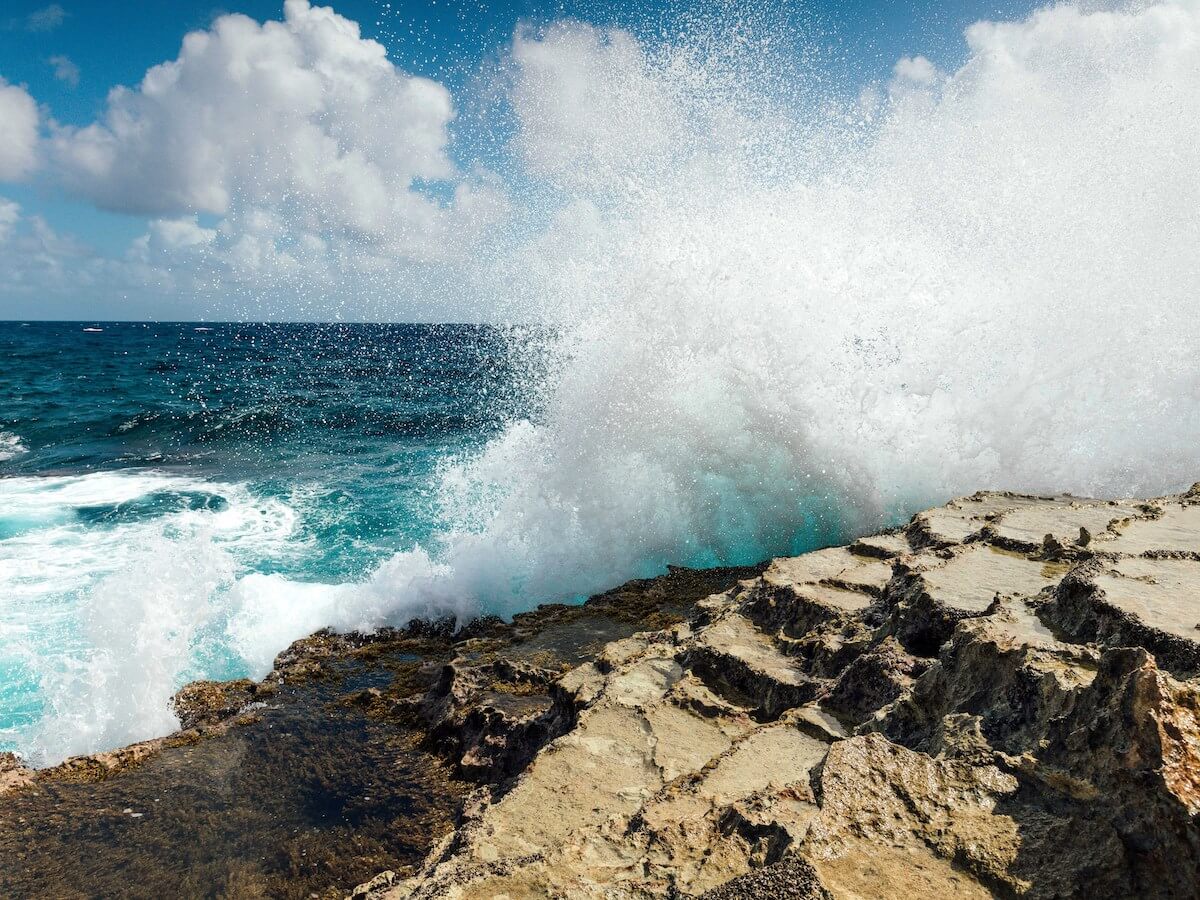
If you’ve spent any time researching Aruba’s off-the-beaten-path side, you’ve probably come across the name Wariruri Beach. Tucked along Aruba’s rugged northeast coastline — a world away from the manicured resort strip of Palm Beach — Wariruri is one of the island’s most dramatic and untamed coastal spots. It draws surfers, photographers, hikers, and adventurous travelers looking for the side of Aruba that most tourists never see.
This guide covers everything you need to know before you go: what Wariruri Beach is actually like, how to get there, what you can do, what to bring, and how it fits into a broader north coast adventure.
Disclosure: Some of the links below may be affiliate links. At no additional cost to you, we may earn a small commission if you make a purchase.
Quick Facts
- Location: Noord, northern Aruba (northeast coast)
- Beach size: Approx. 60 x 60 meters
- Access: 4×4 or off-road vehicle strongly recommended
- Facilities: None, no restrooms, no food vendors, no lifeguards
- Swimming: Not safe, strong currents, powerful waves
- Best for: Surfing, photography, fishing, hiking, watching waves
- Parking: Free, limited spaces at the entrance
- Nearby: Baby Natural Bridge, Alto Vista Chapel, Bushiribana Gold Mill Ruins
- Dogs allowed: Yes
What is Wariruri Beach?
Wariruri Beach sits on Wariruri Bay, a compact sand cove of about 60 meters wide and 60 meters long, surrounded by a dramatic limestone coastline that has been shaped and sculpted over centuries by the relentless force of the Atlantic Ocean. Unlike Aruba’s famous west coast beaches with their powdery white sand and calm turquoise water, Wariruri is raw, windswept, and utterly untouched by commercial development.
The limestone cliffs that frame the cove have been eroded into extraordinary shapes… caves, archways, and natural formations that reward anyone who takes the time to explore on foot. Right near the beach, a small natural bridge (sometimes called the Baby Natural Bridge) remains standing. It’s a beautiful miniature version of Aruba’s famous Natural Bridge, which collapsed in 2005. It’s one of the few remaining natural arches on the island and alone makes the journey worthwhile.
The beach itself has coarser, darker-colored sand than the west coast, and the waves are powerful and consistent. The water here faces the full force of the northeast trade winds and Atlantic swells, which is exactly why it’s become a favorite among Aruba’s small but enthusiastic surf community.
This is not a beach for swimming or sunbathing in the traditional sense. It’s a beach for watching, exploring, photographing, and, if you know what you’re doing on a board, surfing.
Where is Wariruri Beach?
Surfing at Wariruri Beach
Wariruri is arguably the most accessible and beginner-friendly surf spot on Aruba’s northeast coast, which makes it a standout among the island’s handful of wave-riding destinations.
The Waves
Wariruri features a beach and reef break with both left and right breaking waves, meaning surfers can catch waves peeling in either direction depending on conditions. Waves typically break cleanly on both sides of the bay, and on good days they can reach up to five feet. The quality of the surf isn’t heavily affected by the tide, making it more forgiving to visit at varying times.
Because waves break in both directions, it’s suitable for surfers who prefer rights or lefts, a flexibility that adds to its appeal among locals and visiting riders.
Skill Level
Wariruri is described by surf guides as one of the more beginner-to-intermediate-friendly breaks in Aruba, with gentle, consistent waves that offer long, smooth rides on good days. That said, the word “beginner” comes with caveats.
The currents and rocks require real awareness, particularly on the left side of the bay. Anyone surfing here should be a confident swimmer and understand how to read water conditions. If you’re a true beginner, take a lesson before attempting Wariruri independently.
Best Time to Surf Wariruri
The prime surf season in Aruba runs from October through March, when powerful North Atlantic swells arrive and produce the island’s most consistent wave conditions. December is frequently cited as the single best month for Wariruri specifically when conditions are clean roughly 20% of the time in December, which is high by Caribbean standards.
The trade wind season (May–August) also produces surfable waves, though they can be choppier and less cleanly shaped due to the strong northeast winds. Late afternoons tend to offer slightly lighter winds, which translates to cleaner wave faces.
Weekdays are significantly quieter than weekends, when local surfers arrive in numbers and the small cove can feel genuinely crowded.
Hazards to Know
- Strong rip currents: Particularly on the left (northern) side of the bay. Surf close to other people and never surf alone.
- Rocks: Both in the water and on the approach to the water’s edge. Water shoes are helpful.
- No lifeguards: Wariruri has zero rescue infrastructure. Know your limits.
- No surf rentals nearby: Bring your own board. There are no surf shops or rental operations at or near the beach. If you need to rent gear, arrange it in advance from operators in the Palm Beach area (boards typically start around $35 USD/day).
Can You Swim at Wariruri Beach?
No… and this is important. Wariruri is not safe for casual swimming or snorkeling. The combination of strong Atlantic currents, powerful breaking waves, and the constant northeast trade winds creates conditions that are hazardous for anyone not experienced in rough water. Even strong swimmers can be swept by rip currents at this beach.
If you want to get in the water, keep your feet at the edge where the waves wash up the sand, but don’t venture in. Save swimming for Aruba’s protected west coast beaches, Eagle Beach, Baby Beach, or Boca Catalina are all excellent options.
Photography at Wariruri Beach
Even if you have no interest in surfing or fishing, Wariruri Beach is worth making the trip for the photography alone. The combination of jagged limestone formations, crashing Atlantic surf, the small natural bridge, and the dramatic northeast coast scenery creates one of the most photogenic settings on the entire island.
What to Photograph at Wariruri
- The Baby Natural Bridge: Best in morning or midday light when the arch is illuminated
- Surfers riding and dropping into waves from the vantage point of the limestone rocks above
- Fishermen casting lines from the rocky shoreline: A classic scene of Aruban coastal life
- Wave action against the limestone cliffs: Telephoto lenses capture the spray dramatically
- Coastal rock formations: The erosion patterns in the limestone are extraordinary up close
- Wide landscape shots of the cove from the hill above, which offers sweeping views of the bay and the broader northeast coastline
The “Wari walk” (a local hiking trail; see below) takes you to elevated vantage points that offer some of the best aerial-style views of the beach and its surroundings.
Photography Tips
- Come in the morning for the best light on the natural bridge.
- A polarizing filter dramatically improves ocean photography in Aruba’s bright sunlight.
- Protect your gear from windblown salt spray. The northeast coast is exposed and the mist can reach camera equipment even from a distance.
Hiking at Wariruri: The “Wari Walk”
One of the best-kept secrets about Wariruri Beach is the hiking trail that connects it to the surrounding areas, known locally as the “Wari Walk” (short for Wariruri). This trail is one of the most rewarding short hikes on the island and offers a perspective on Aruba’s northeast coast that few visitors ever see.
The Trail
An unmarked dirt trail begins just inland from the beach and climbs up into the low hills above the coastline. From the top, you get sweeping views back down over Wariruri Bay and along the dramatic northeast coastline in both directions. It’s spectacular. The terrain is classic Aruba outback: cacti, aloe vera, boulders, and that characteristic arid scrub that looks almost otherworldly in the midday light.
The trail loops around the hill and deposits you approximately a quarter mile north of where you parked, from which the coastal dirt road brings you back. The whole loop takes roughly an hour at a leisurely pace. Part of the trail also serves as a mountain bike route, so you may encounter cyclists.
What You Might See Along the Trail
- Wild donkeys (a real possibility as they roam freely in this area)
- Iguanas sunning themselves on rocks
- Exceptional cactus and aloe formations
- Panoramic views of the north coast and open ocean
- Climbable rock outcroppings for kids and adults who want a scramble
Trail Tips
- Wear closed-toe shoes. The terrain is rocky.
- Bring plenty of water. There is no shade and midday heat is intense.
- Go early, before 9 AM. The midday heat on the exposed north coast is relentless.
- The trail is unmarked, so pay attention to your path and consider downloading an offline map before you go.
Fishing at Wariruri Beach
Wariruri is a longtime favorite spot for Aruban fishermen, who cast lines from the rocky limestone edges of the bay. The rough Atlantic water that makes swimming dangerous makes for productive fishing. Local anglers regularly pull in a range of fish from this stretch of coast.
Watching local fishermen at work is itself a highlight of a visit to Wariruri. It’s one of those glimpses into everyday Aruban life that you won’t find at the resort beaches. If you want to fish yourself, bring your own gear as there are no rental operations nearby. No fishing license is required for recreational fishing in Aruba.
The Baby Natural Bridge: Wariruri’s Hidden Bonus
Adjacent to Wariruri Beach sits one of Aruba’s lesser-known natural wonders: a small natural bridge carved through the limestone by centuries of wave action. This is often called the “Baby Natural Bridge” to distinguish it from Aruba’s famous Natural Bridge, which stood on the north coast for centuries before collapsing in 2005.
The Baby Natural Bridge is fully intact and genuinely impressive up close. The arch frames perfect views of the crashing Atlantic beyond, like a natural picture frame. Unlike some of Aruba’s more famous sights, this one sees relatively few visitors and you may well have it to yourself.
It sits right on the limestone coastline near the beach, accessible by a short walk from the parking area. Approach carefully as the rocks are uneven and the surf nearby can surge unexpectedly.
What to Bring to Wariruri Beach
Wariruri has absolutely no facilities. No restrooms, no food, no water, no shade structures, no beach chair rentals… nothing. Everything you need for your visit must come with you, and the remote location means there’s nowhere nearby to grab something you forgot.
Essential Items
- Water: Bring significantly more than you think you need. The heat and lack of shade are intense.
- Snacks or a packed lunch: There’s nothing to buy within reasonable distance.
- Sunscreen (high SPF, reef-safe): The northeast coast gets full sun with no tree cover.
- Closed-toe shoes for hiking and navigating rocky terrain. (Water shoes are also useful.)
- Hat and sunglasses: Great sun protection in this exposed location.
- Camera or smartphone with a fully charged battery. The photography opportunities here are outstanding.
- A portable power bank if you’re shooting video.
- Trash bag to pack out what you pack in.
If surfing:
- Your own board (no rentals available)
- Surf leash
- Awareness of current conditions before entering the water
How to Get to Wariruri Beach
Wariruri Beach is in the Noord district of northern Aruba, along the northeast coast. There is no public bus service to this area so you need your own transportation.
By Rental Car or 4×4
A 4×4 or high-clearance vehicle is strongly recommended. The final stretch of road to Wariruri is unpaved dirt, and after rain it can become rough. A standard low-clearance rental car can make it in dry conditions, but it’s not ideal. Renting a 4×4 in Aruba is the most practical approach for anyone planning to explore the north coast independently.
Directions from Palm Beach
Head north along the main resort strip toward the California Lighthouse. From the lighthouse, follow the coastal road east and then south. Pass the Alto Vista Chapel (you’ll see signs), just before reaching the chapel, turn right and follow the road toward the coast.
Continue past the Bushiribana Gold Mill Ruins. The turnoff to Wariruri Beach is a left onto a dirt road. Follow it down to the parking area at the beach. GPS coordinates for Wariruri Beach: approximately 12.5661° N, 70.0124° W.
Alternative route from Oranjestad
Head east on Caya G.F. Betico Croes (Main Street). Follow signs toward Noord. Continue through Turibana, turn right, and follow directions toward Alto Vista. Just before the Alto Vista Chapel, turn right toward the coast and continue to the beach.
Travel time from Palm Beach: approximately 20–30 minutes
Travel time from Oranjestad: approximately 25–35 minutes
Parking: Free parking is available at the beach entrance, though spaces are limited. Street parking along the approach road is also possible.
By Off-Road Tour
Many of Aruba’s off-road tours include Wariruri Beach as a stop. this is actually one of the best ways to visit if you’re not renting a 4×4 independently. Guided tours provide transportation, local knowledge, and the context that makes the north coast experience so much richer.
Tours that visit Wariruri Beach include:
- Off-Road UTV Tour with Wariruri Beach & Baby Natural Bridge: One of the most popular island adventure experiences, covering the highlights of Aruba’s wild north and east coasts. Check availability and book through Viator.
- Aruba UTV Tour with Natural Cave Pool and Cliff Jumping: Typically includes Alto Vista Chapel, Bushiribana Ruins, Baby Natural Bridge, and Wariruri. Duration approximately 4 hours. Check prices on Viator.
- Horseback Riding Wariruri Beach Tour in Aruba: Want a different type of tour? Join a small group to ride horses with panoramic views of Wariruri Beach. Check availability and book through Viator.
What’s Nearby: Making a Day of the North Coast
Wariruri Beach is most rewarding as part of a broader north coast exploration. The surrounding area has a remarkable concentration of Aruba’s most dramatic natural and historical sights, all within a short drive or hike of each other.
Baby Natural Bridge
Right next to Wariruri Beach, this small natural arch carved through the limestone is one of the most photogenic spots on the north coast. Don’t miss it. It’s just a short walk from the parking area.
Bushiribana Gold Mill Ruins
A 10-minute drive from Wariruri, the ruins of a 19th-century gold smelting mill stand dramatically on the north coast hillside with sweeping ocean views. Aruba had a brief gold rush in the 1800s, and these ruins are the most photogenic remnant of that era.
Alto Vista Chapel
Aruba’s iconic yellow chapel, and the first church built on the island, sits on a hilltop about 10 minutes from Wariruri, offering panoramic views. It’s a beloved landmark and an easy add-on to any north coast day. Read our full guide to Alto Vista Chapel.
California Lighthouse
The historic lighthouse at Aruba’s northern tip is about 15 minutes from Wariruri and offers some of the best views on the island, especially at sunset. The surrounding area has a restaurant/bar with a terrace and spectacular coastal views. Read our full guide to the California Lighthouse.
Casibari Rock Formations
Aruba’s dramatic boulder fields, located slightly inland, are one of the island’s most surreal landscapes. It’s climbable, photogenic, and utterly unlike anything on the west coast. Worth adding to any north coast day. Read our full guide to Casibari.
Andicuri Beach
The next beach south along the northeast coast from Wariruri, Andicuri is another wild Atlantic-facing beach popular with bodyboarders and photographers. The rocky cliffs and powerful surf make for dramatic scenery. Read more about the best beaches in Aruba.
Where to Stay Near Wariruri Beach
Wariruri Beach is in the Noord district of northern Aruba. It’s the same general area as Palm Beach. The main resort strip is about 20–30 minutes from the beach by car, making any Palm Beach hotel a convenient base for a north coast day trip.
Top hotels near Wariruri Beach (Palm Beach area):
- The Ritz-Carlton Aruba: Ultra-luxury beachfront resort, about 20 minutes from Wariruri
- Aruba Marriott Resort & Stellaris Casino: Premium Palm Beach resort with H2Oasis adults-only pool
- Hyatt Regency Aruba Resort & Casino: Family-friendly luxury with great beach access
- Holiday Inn Resort Aruba: Solid mid-range option on Palm Beach
Is Wariruri Beach Worth Visiting?
Absolutely, with the right expectations.
Wariruri Beach is not for everyone. If you’re looking for a traditional Caribbean beach day with calm water, beach chairs, a bar serving rum punches, and easy Instagram shots of turquoise sea, Aruba has plenty of that on the west coast, and Wariruri won’t deliver it.
But if you want to see a side of Aruba that’s wild, raw, and off the tourist trail or if you’re a surfer, a photographer, a hiker, an adventure traveler, or simply someone who wants to feel like they’ve discovered something real… Wariruri is absolutely worth the effort to reach.
The Baby Natural Bridge alone is worth the drive. The chance to watch local surfers in a beautiful, untouched setting is something most Aruba visitors never experience. And the Wari Walk hike offers views of the island that you simply can’t get from the resort strip.
Pair it with a stop at Alto Vista Chapel and the Bushiribana Ruins, and you have one of the best half-days on the entire island.
Frequently Asked Questions About Wariruri Beach
Final Tips for Visiting Wariruri Beach
1. Go early.
The north coast gets intensely hot in the midday sun with little natural shade. Arriving before 9 am makes the hiking trail and beach exploration far more comfortable, and the light for photography is beautiful in the morning.
2. Don’t go alone.
The remoteness of Wariruri means help is far away if something goes wrong in the water. Always go with at least one other person.
3. Combine it with other north coast stops.
Wariruri is even better as part of a broader loop that includes Alto Vista Chapel, the Bushiribana Ruins, and the California Lighthouse. A full north coast day feels like exploring a completely different island… and it is.
4. Respect the environment.
Wariruri is pristine precisely because it’s remote and undeveloped. Pack out everything you bring in, don’t disturb the wildlife, and keep the limestone formations intact. This spot deserves to stay exactly as it is.
Have additional questions about visiting Wariruri Beach?
Let us know in the comments!


