Aruba vs. Jamaica: Which Caribbean Island Is Right for You?

Two of the Caribbean’s most iconic destinations, compared honestly: beaches, safety, cost, all-inclusives, food, culture, and more.
Aruba and Jamaica are two of the most recognizable names in Caribbean travel, and they could hardly be more different from each other.
Aruba is calm, consistent, and famously easy. Sunshine nearly every day, no hurricane risk, an extremely safe environment, and a well-oiled tourism machine that makes first-time international travelers feel right at home. Jamaica is vivid, musical, culturally deep, and genuinely unlike anywhere else in the Caribbean. It’s an island with real personality. Jerk chicken smoking on the roadside. Reggae drifting from beach bars. And, some of the most legendary resort experiences in the world.
Both are excellent choices. But they serve different kinds of traveler, and the gap between them on certain categories, particularly safety and weather, is significant enough that the right answer for you isn’t always obvious.
This guide breaks down every category that matters so you can make an informed decision.
Disclosure: Some of the links below may be affiliate links. At no additional cost to you, we may earn a small commission if you make a purchase.
Aruba vs. Jamaica: At a Glance
| Category | Aruba | Jamaica |
|---|---|---|
| Location | Southern Caribbean (ABC Islands) | Northern Caribbean |
| Size | 69.1 sq miles | 4,244 sq miles |
| Language | Papiamento, Dutch, English, Spanish | English (Jamaican Patois) |
| Currency | Aruban Florin (USD widely accepted) | Jamaican Dollar (USD accepted at resorts) |
| Hurricane Risk | Very low (outside the hurricane belt) | High (directly in the hurricane belt) |
| US Travel Advisory | Level 1 — Exercise Normal Precautions | Level 2 — Exercise Increased Caution |
| Avg. Hotel/Night (mid-range) | $300–$500 | $165–$350 (non-all-inclusive) |
| All-Inclusive Scene | Good — several solid options | Exceptional — one of the Caribbean’s best |
| Best-Known Beach | Eagle Beach | Seven Mile Beach, Negril |
| Best For | Weather reliability, safety, beach variety | Culture, all-inclusive value, personality |
Location & Getting to Jamaica & Aruba
Where is Jamaica?
Jamaica is one of the Caribbean’s largest islands, covering roughly 4,244 square miles, about 60 times the size of Aruba. It sits in the northern Caribbean, south of Cuba and west of Hispaniola (Haiti and the Dominican Republic). The island is an independent nation and a member of the British Commonwealth, located approximately 90 miles south of the eastern tip of Cuba and about 100 miles west of Haiti.
Jamaica is a mountainous island, with the Blue Mountains dominating the interior and rising to nearly 7,400 feet at their peak. The coasts range from wide resort beaches on the northwest (Montego Bay, Negril) to rugged cliffs and fishing villages in the east. The island’s geography creates distinct regional personalities — lush and tropical in the mountains, beachy and resort-focused on the northwest coast, quieter and more rural in the east and south.


Where is Aruba in Relation to Jamaica?
Aruba sits approximately 1,200 miles southeast of Jamaica, off the coast of Venezuela in the southern Caribbean, a completely different part of the Caribbean basin. Jamaica sits in the northern Caribbean, making it much closer to the US, Cuba, and the Bahamas. Aruba’s far-south position is precisely why it avoids hurricanes; Jamaica’s northern Caribbean location puts it directly in the path of Atlantic storm systems that travel westward across the region.
| Aruba | Jamaica | |
|---|---|---|
| Region | Southern Caribbean | Northern Caribbean |
| Nearest Mainland | Venezuela (18 miles) | Cuba (90 miles south) |
| Coordinates | 12.5° N, 70.0° W | 18.1° N, 77.3° W |
| Size | 69 sq miles | 4,244 sq miles |
| Distance from Each Other | ~1,200 miles apart | — |
How Far is Jamaica from Major US Cities?
Jamaica is one of the closest Caribbean islands to the United States, particularly for travelers in Florida and the Southeast. This is one of Jamaica’s genuine practical advantages. The two main international airports are Sangster International (MBJ) in Montego Bay (the primary tourist gateway) and Norman Manley International (KIN) in Kingston.
| Departure City | Approximate Flight Time to MBJ | Direct Flights Available? |
|---|---|---|
| Miami, FL | ~1.5 hours | Yes |
| Atlanta, GA | ~2 hours | Yes |
| Charlotte, NC | ~2.5 hours | Yes |
| New York (JFK/EWR) | ~3.5 hours | Yes |
| Boston, MA | ~4 hours | Yes |
| Houston, TX | ~3 hours | Yes |
| Chicago, IL | ~3.5 hours | Yes |
| Los Angeles, CA | ~6 hours | Connections via hub |
| Dallas, TX | ~3 hours | Yes |
Flight times are approximate and vary by airline and routing. Montego Bay (MBJ) is the primary arrival airport for resort travelers.
How Far is Aruba from Major US Cities?
For comparison, Aruba flight times from the same cities:
| Departure City | Approximate Flight Time | Direct Flights Available? |
|---|---|---|
| Miami, FL | ~3 hours | Yes |
| Atlanta, GA | ~4 hours | Yes |
| Charlotte, NC | ~4 hours | Yes |
| New York (JFK/EWR) | ~4.5 hours | Yes |
| Boston, MA | ~5 hours | Yes |
| Houston, TX | ~4.5 hours | Yes |
| Chicago, IL | ~5.5 hours | Yes |
| Los Angeles, CA | ~8 hours | Connections via hub |
| Dallas, TX | ~4.5 hours | Yes |
Jamaica has a clear flight time advantage over Aruba from virtually every US departure city, often by 1.5 to 2 hours. For travelers in Florida and the Southeast, Jamaica is one of the closest Caribbean options available. Aruba’s longer flight time is the trade-off for its southern location and near-guaranteed sunshine. More on getting to Aruba →
Winner
Tie. Jamaica has a slight edge for Southeast US travelers on flight time. Aruba has more direct city connections overall and the pre-clearance advantage on the way home.
Beaches
Both islands have genuinely excellent beaches, but they’re different in character — and the comparison is more nuanced than it first appears.
Aruba
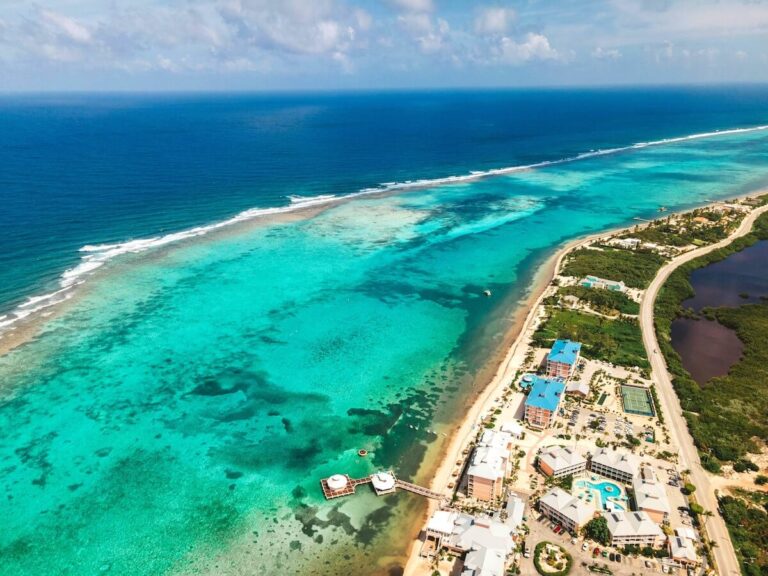
Aruba’s beaches are remarkable for their consistency. The trade winds that blow across the island from the east keep the western coast, where nearly all the resort beaches sit, calm, clear, and swimmable virtually every day of the year. The water is a brilliant turquoise, the sand is fine and pale, and conditions rarely disappoint.
Eagle Beach is the crown jewel: wide, uncrowded even during peak season, lined with the island’s famous wind-bent divi-divi trees, and regularly ranked among the world’s best. Palm Beach delivers a livelier, more resort-bar atmosphere. Baby Beach on the island’s southern tip is a sheltered lagoon so calm it’s practically a swimming pool. From Malmok to Mangel Halto, the variety is impressive for an island its size.
Jamaica
Jamaica’s beaches are beautiful but more variable. The undisputed star is Seven Mile Beach in Negril, a long, gently curving stretch of powdery white sand with clear, shallow water and one of the Caribbean’s most celebrated sunset scenes. The atmosphere is lively, beachy, and quintessentially Jamaican: reggae from beach bars, vendors selling fresh coconut and jerk snacks, water sports operators up and down the shore. It’s genuinely wonderful.
Montego Bay’s Doctor’s Cave Beach is another classic. Beyond the headline names, Jamaica’s beach quality drops off more than Aruba’s does. Some beaches near major tourist towns are crowded and hustled, and the consistency of conditions varies more across the island.
One practical reality worth knowing: beach vendors in Jamaica can be persistent, particularly at public beach sections. A polite “no, thank you” usually works, but it’s a more frequent experience than on Aruba’s beaches.
Winner
Aruba on consistency and overall quality. Jamaica’s best beaches (particularly Seven Mile Beach in Negril) are spectacular and can hold their own, but Aruba’s entire coastline delivers at a higher average level.
Weather & Hurricane Risk
This is the most important practical difference between these two islands, and it needs to be said directly.
Aruba
Aruba sits below the hurricane belt, approximately 15 degrees north of the equator and just off the Venezuelan coast. It receives less than 20 inches of rain per year and averages over 300 sunny days annually. The famous trade winds keep temperatures consistently comfortable at around 82°F (28°C) year-round without feeling oppressively humid.
There is no meaningful hurricane risk. You can book Aruba in September, October, or November (the heart of Caribbean hurricane season) and feel completely confident in the weather. This level of year-round reliability is genuinely rare in the Caribbean. Full Aruba weather guide → | Hurricanes in Aruba →
Jamaica
Jamaica sits squarely in the hurricane belt and has experienced some of the most powerful storms in Atlantic history. Hurricane season officially runs June through November, and Jamaica takes direct hits more often than many Caribbean islands.
In October 2025, Hurricane Melissa, the most powerful storm of the 2025 Atlantic season, made landfall in Jamaica as a Category 5 hurricane, causing widespread damage particularly in the western part of the island including Montego Bay. Sandals and Beaches resorts in Montego Bay were still closed as of early 2026, with planned reopening in May 2026. The island is recovering, with most major airports and many resorts operational.
Even setting aside catastrophic events, Jamaica’s weather is simply less reliable than Aruba’s: More rainfall, more cloud cover, a longer and more pronounced rainy season.
| Aruba | Jamaica | |
|---|---|---|
| Annual Rainfall | ~18 inches | ~77 inches |
| Hurricane Risk | Extremely low (outside belt) | High (inside belt) |
| Best Travel Window | Year-round | December through April |
| Summer/Fall Travel Risk | Minimal | Significant hurricane exposure |
| Avg. Temp (year-round) | 82°F / 28°C | 80–90°F / 27–32°C |
| Humidity | Low — trade winds keep it comfortable | Higher — especially May–November |
Winner
Aruba, and by a wide margin. If there is any chance you’re traveling outside of December through April, or if weather certainty matters to you, Aruba is the far safer booking.
Safety
This is the other major differentiating category, and it deserves a direct, honest assessment.
Aruba
Aruba holds a US State Department Level 1 travel advisory, “Exercise Normal Precautions”, the lowest possible designation. Violent crime against tourists is rare. Petty theft is uncommon. The island is consistently cited as one of the safest destinations in the entire Caribbean and in the broader Latin America region.
Solo travelers, families with young children, and first-time international visitors regularly choose Aruba precisely because of this safety record. You can walk around after dark, rent a car and drive independently, and explore off the resort strip with confidence. Safety in Aruba →
Jamaica
Jamaica currently holds a US State Department Level 2 advisory, “Exercise Increased Caution”, due to crime, health, and natural disaster risks. This was downgraded from a Level 3 advisory in January 2026 after Jamaica recorded fewer than 700 murders in 2025 (the lowest figure in four decades) representing meaningful progress.
However, the State Department still notes that Jamaica’s homicide rate remains among the highest in the Western Hemisphere, that violent crime including sexual assault is a risk throughout the island, and that gated resorts are not immune to violent crime. The US Embassy specifically restricts its own employees from using public buses or driving between cities at night (the same precautions it recommends for US citizens).
This doesn’t mean Jamaica is unsafe to visit. Millions of tourists travel there every year without incident. The all-inclusive resort zones in Negril, Ocho Rios, and, when it fully reopens, Montego Bay are generally well-secured environments. But the safety picture is meaningfully different from Aruba’s, and independent travelers who want to move around freely beyond resort areas face risks that simply don’t exist in Aruba.
Additionally, medical care in Jamaica is significantly less developed than in Aruba. The State Department warns that basic and specialized medical care may not be available in many parts of Jamaica, and that ambulance services are not always reliable. It’s a consideration worth factoring in, particularly for families with young children or travelers with health conditions.
Winner
Aruba, clearly and significantly. The gap between a Level 1 and a Level 2 advisory, and the specific nature of the risks the State Department identifies for Jamaica, represents a real difference in on-the-ground conditions.
Cost
Cost is one of the most interesting categories in this comparison, because the answer genuinely depends on how you travel.
Jamaica
Jamaica is often more affordable than Aruba, particularly if you’re booking an all-inclusive resort package, which is the dominant way most American tourists visit Jamaica. Packages that include flights, accommodations, meals, drinks, and activities can start from around $200 per person per night at mid-range resorts, and lower during off-peak periods.
Budget-minded travelers can find solid options in the $140–$200 per night range. At the top end, Sandals Resorts and Beaches can approach $700–$1,000+ per person per night for premium room categories, but the all-inclusive model means no nickel-and-diming at the bar or restaurant.
Aruba
Aruba runs mid-to-upper range for the Caribbean across the board: Hotels, restaurants, activities, and car rentals. Budget options exist (guesthouses, hostels, smaller hotels) but Aruba doesn’t discount the way Jamaica does, and all-inclusive pricing is generally higher per night than Jamaica’s equivalent product.
On the other hand, Aruba’s à la carte experience gives you more control over spending. You can save money by eating at local budget spots, shopping at grocery stores, and spacing out splurges.
| Expense | Aruba (Estimate) | Jamaica (Estimate) |
|---|---|---|
| Budget hotel/night | $120–$200 | $80–$165 |
| Mid-range hotel/night | $300–$500 | $165–$350 |
| All-inclusive/night (per room) | $350–$700 | $200–$700+ |
| Casual restaurant meal (per person) | $15–$35 | $10–$25 |
| Rental car/day | $45–$80 | $50–$90 |
| Local excursion/tour | $50–$100 | $40–$90 |
Estimates reflect 2024–2025 data. Peak season and property tier vary significantly.
Winner
Jamaica for budget and all-inclusive value. Aruba for those doing à la carte travel with a higher-than-budget spend. If comparing all-inclusive for all-inclusive, Jamaica typically undercuts Aruba on price.
All-Inclusive Resorts
This is Jamaica’s signature strength, and it’s worth its own section.
Jamaica
Jamaica is the Caribbean’s all-inclusive capital. Sandals Resorts, Beaches Resorts, Couples Resorts, Riu, Iberostar, Moon Palace, Breathless, Hyatt Zilara, Excellence: The roster of major all-inclusive brands operating in Jamaica is longer than virtually any other single Caribbean island.
These resorts have been refined over decades and offer genuinely excellent value with unlimited meals at multiple restaurants, premium liquor, all water sports, entertainment, and often airport transfers, all included in one upfront price. Sandals in particular has built a global reputation for high-end all-inclusive experiences with consistently strong service, top-shelf drinks, and an impressive variety of dining options across their properties.
For many American travelers, an all-inclusive vacation to Jamaica is the quintessential “Caribbean trip.” It’s simple, social, well-priced for what you get, and the resorts themselves are world-class facilities.
Aruba
Aruba has solid all-inclusive options: Manchebo Beach Resort, Divi & Tamarijn All Inclusive, Riu Palace, Amsterdam Manor, and a handful of others, but the all-inclusive scene is smaller and generally less competitive than Jamaica’s.
Many of Aruba’s best hotels operate on a room-only or bed-and-breakfast basis, with dining and activities paid separately. This gives more flexibility, but it’s a different model. All-inclusive resorts in Aruba →
Winner
Jamaica by a significant margin, if all-inclusive is your preferred travel style. The depth of options, price competition, and brand quality in Jamaica’s all-inclusive market is unmatched in the Caribbean.
Food & Culture
Jamaica is one of the most culturally distinctive islands in the Caribbean, and that distinction shows up on the plate and in the music as much as anywhere.
Jamaica
Jamaican food and culture are specific, celebrated, and genuinely worth experiencing. Jerk chicken and jerk pork marinated in scotch bonnet peppers, allspice, and a blend of aromatics, then slow-smoked over pimento wood, are among the most copied dishes in the world and are best experienced at a proper roadside jerk pit in Jamaica.
Ackee and saltfish, the national dish, is a savory breakfast that surprises most first-timers in the best way. Fresh patties from Tastee or Juici Beef. Blue Mountain coffee, one of the world’s most prized. Rum punch. The food is excellent, affordable, and deeply tied to the island’s identity.
Then there’s the culture. Jamaica is the birthplace of reggae music, and Bob Marley’s influence is felt everywhere from resort playlists to Kingston street art. The Rastafarian movement, dancehall music, and the island’s complex colonial and independence history give Jamaica a cultural depth that few Caribbean islands can match. If you want to feel like you’ve been somewhere, Jamaica delivers.
Aruba
Aruba’s food and culture are their own kind of interesting. We’re talking a Dutch-Caribbean-Latin American fusion that reflects the island’s unusual history as a Dutch colony with Venezuelan proximity and an English-speaking, multilingual population.
The local cuisine includes keshi yena (Gouda cheese stuffed with meat, raisins, and olives — a strangely delicious colonial-era dish), seafood stew, and pan bati cornbread. The dining scene has grown considerably in recent years with strong options in Italian, international, and contemporary Caribbean. Oranjestad has good character and is walkable. But Aruba’s cultural identity is quieter and less internationally recognized than Jamaica’s. Where to eat in Aruba →
Winner
Jamaica, and it’s not particularly close for travelers who value culture and local cuisine. Jamaica’s food, music, and cultural identity are among the most vivid in the entire Caribbean.
Activities & Things to Do
Jamaica
Jamaica’s activities lean toward natural drama and cultural experience. The major highlights:
- Dunn’s River Falls (Ocho Rios): Jamaica’s most visited attraction: terraced limestone waterfalls you climb alongside a guide while holding hands in a chain. Touristy, fun, and genuinely beautiful.
- Seven Mile Beach, Negril: The full beach day experience including sunset at Rick’s Café, where cliff divers leap into the sea as the sun goes down.
- Blue Hole / Reach Falls: Natural swimming holes in jungle settings.
- Blue Mountains: Lush, cool hiking and coffee farm tours; excellent for a day trip from Kingston or Ocho Rios.
- Mystic Mountain (Ocho Rios): Rainforest bobsled ride, zip-lining, and a sky explorer gondola.
- Rose Hall Great House: A historic great house with a notable ghost story, just outside Montego Bay.
- Rum tours: Appleton Estate rum distillery in the Nassau Valley is a top-rated experience.
- Rafting on the Rio Grande: A classic, leisurely bamboo raft ride through the jungle.
Aruba
Aruba’s activities are diverse in a different way. They are built for variety across terrain, water, and nightlife:
- Off-road Jeep and UTV tours through Arikok National Park, visiting the Conchi Natural Pool and remote beaches
- Flamingo encounter at Renaissance Island: One of the Caribbean’s most photographed wildlife experiences
- Antilla shipwreck diving and snorkeling tours
- Sunset cruises and submarine tours
- Windsurfing and kitesurfing: Aruba’s consistent trade winds make it a world-class destination for both
- Casinos: Multiple full-service casino options at major resorts
- Animal encounters: Donkey Sanctuary, Ostrich Farm, Butterfly Farm
- Nightlife: Along the Palm Beach strip
Winner
Tie. Both islands offer excellent activity variety, just in different directions. Jamaica wins on natural drama, cultural experiences, and eco-adventures. Aruba wins on water sports variety, nightlife, casinos, and organized tours.
Nightlife
Aruba
Aruba’s nightlife is lively and accessible. The Palm Beach strip comes alive after dark with beach bars, live music venues, and multiple full-service casinos. Oranjestad has its own evening energy. The Chogogo Party Bus is a popular option for covering multiple spots in one night. Top nightclubs in Aruba →
Jamaica
Jamaica’s nightlife depends heavily on where you’re staying. Negril’s Seven Mile Beach transforms into a full beachside party scene after sunset, with bars and clubs running late. Rick’s Café is famous for its sunset cliff-jumping crowd that rolls into evening cocktails.
Montego Bay’s Hip Strip has bars, clubs, and entertainment, though the surrounding area requires more awareness than Aruba’s resort zone. Ocho Rios has a solid nightlife scene around the resort areas. Jamaica’s energy after dark is infectious and locally flavored in a way Aruba’s isn’t.
Winner
Tie. Different styles, both solid. Aruba wins on casinos and polished resort bar experience. Jamaica wins on raw energy and local flavor.
Families & Kids
Aruba
Aruba is a top family destination. It’s calm, safe, easy to navigate, and full of activities that work for all ages. The calm trade-wind-sheltered water along the west coast means even young children can swim safely. Baby Beach is essentially a giant calm wading pool.
Water parks, animal encounters, submarine tours, and the flamingo encounter are all big hits with kids. The island’s safety record means parents can relax in a way that’s harder on some other islands. Family activities in Aruba →
Jamaica
Jamaica’s all-inclusive resorts are very family-friendly, particularly Beaches Resorts, which has built an entire brand around family all-inclusives with dedicated kids’ programs, Sesame Street characters, waterparks, and activities designed for every age group. Sandals has adults-only properties. Beaches is the family arm. Outside the resort, however, Jamaica is a more complex environment for families traveling independently.
Winner
Aruba for independent family travel. Jamaica for families committed to an all-inclusive resort experience, particularly a Beaches property.
Where to Stay
Aruba
Aruba’s accommodation scene covers every price point. The high-rise zone along Palm Beach includes large resort hotels, like Marriott, Riu, Holiday Inn, with full amenities and easy walkability to restaurants and bars. The low-rise zone along Eagle Beach has smaller, quieter properties, including the celebrated Bucuti & Tara Beach Resort, an adults-only, eco-certified property that consistently ranks among TripAdvisor’s top hotels in the Caribbean.
Budget travelers can find guesthouses and hostels. Full guide to where to stay in Aruba →
Jamaica
Jamaica’s accommodation scene is dominated by all-inclusive resorts, which is its signature strength. The major resort areas are:
- Montego Bay: The largest resort concentration, close to the airport; still partially recovering from Hurricane Melissa as of early 2026, with some properties (including several Sandals) reopening in stages.
- Negril: The most laid-back and beachy atmosphere; home to Sandals Negril, Beaches Negril, Couples Negril, and numerous smaller boutique properties.
- Ocho Rios: Lush, green, near Dunn’s River Falls; good mid-range and luxury options.
- Port Antonio: The quietest, most boutique-oriented area; home to the famous Frenchman’s Cove.
For travelers wanting something beyond all-inclusives, Jamaica has excellent boutique options, particularly in Port Antonio and the Blue Mountains area.
Winner
Aruba for variety across price points. Jamaica for all-inclusive depth and brand selection.
Aruba vs. Jamaica: Which Is Better for You?
Here’s the direct breakdown by traveler type.
Choose Aruba If
- Weather reliability is important, especially for travel outside December through April.
- Safety is a top priority, particularly for independent travel beyond resort zones.
- You want to explore freely, renting a car, dining around, wandering at night.
- You’re traveling with kids and want a calm, low-stress environment.
- You’re a first-time international traveler who wants a high-reward, low-risk destination.
- Windsurfing, kitesurfing, or diving the Antilla wreck is on the agenda.
- Casinos are part of the evening plan.
- You want a beach vacation with beautiful weather and no contingency planning needed.
Choose Jamaica If
- An all-inclusive resort is your preferred (or required) travel mode.
- Budget is a primary concern and you want maximum value per dollar.
- Culture, food, and music matter as much as the beach.
- You’re a short flight from Florida or the US Southeast.
- Dunn’s River Falls, the Blue Mountains, or rum country tours are experiences you want.
- The Jamaica atmosphere (reggae, jerk, sunsets at Rick’s Café) is specifically what you’re after.
- You’re comfortable in a well-managed resort environment and won’t be venturing far from it.
Frequently Asked Questions
No. Aruba holds a US State Department Level 1 travel advisory (Exercise Normal Precautions), while Jamaica currently holds a Level 2 (Exercise Increased Caution) due to crime, health, and natural disaster risks.
Jamaica’s homicide rate remains among the highest in the Western Hemisphere, though recent years have seen improvement. Tourist resort zones are generally safer than the broader island, but the gap between Aruba and Jamaica on safety is real and meaningful. Safety in Aruba →
It depends how you travel. Jamaica is generally more affordable, particularly for all-inclusive resort packages where competitive pricing from major brands like Sandals, Riu, and Iberostar can undercut Aruba’s all-inclusive options significantly. Aruba is more expensive à la carte but offers more flexibility. For a straight all-inclusive comparison, Jamaica is typically the better value.
Yes, but fewer and generally more expensive. Aruba has solid all-inclusive options including the Divi & Tamarijn, Riu Palace, and Manchebo Beach Resort. Jamaica’s all-inclusive market is deeper, more competitive, and offers more brand-name options at more price points. Aruba all-inclusive options →
Yes. Jamaica sits squarely in the Atlantic hurricane belt and has been directly struck by multiple major storms. In October 2025, Hurricane Melissa made landfall as a Category 5 storm, causing widespread damage particularly in western Jamaica. Aruba, by contrast, sits below the hurricane belt and has essentially no hurricane risk. Aruba weather guide →
For most first-time Caribbean travelers, Aruba is the easier and more consistent recommendation. The safety, weather reliability, English-speaking environment, and well-developed tourist infrastructure make it a low-risk, high-reward first international trip.
That said, Jamaica’s all-inclusive resorts provide a self-contained experience that many first-timers find very comfortable. It just requires staying within the resort zone more than Aruba does.
Aruba’s beaches are more consistently excellent across the island, with calm, clear, turquoise water virtually guaranteed every day. Jamaica’s best beach, Seven Mile Beach in Negril, is spectacular and can stand alongside Aruba’s Eagle Beach as one of the Caribbean’s finest. But Jamaica’s beach quality varies more widely, and some beaches near tourist centers can feel hustled and crowded. For pure reliability, Aruba wins. For the specific experience of Negril at sunset, Jamaica holds its own.
Aruba is excellent year-round. There’s genuinely no bad time to go. Jamaica is best visited December through April, when the weather is dry and hurricane season is over. Traveling to Jamaica between June and November introduces real hurricane risk. If you can’t avoid those months, Aruba is the dramatically safer choice.
Ready to Plan Your Aruba Trip?
If Aruba has won you over, here’s everything you need to plan your trip:
- Where to Stay in Aruba: Resorts, all-inclusives, boutique hotels, and budget options
- All-Inclusive Resorts in Aruba: The best fully-inclusive options on the island
- What to Do in Aruba: Beaches, tours, adventures, water sports, and nightlife
- Where to Eat in Aruba: From local jerk-adjacent spots to fine dining
- Safety in Aruba: What you need to know before you go
- Weather in Aruba: Why the weather is one of Aruba’s biggest advantages
- Tips for First-Time Visitors: Everything to know before your first trip
Still Comparing?
See how Aruba stacks up against all the top Caribbean islands in our complete comparison guide.