Aruba vs. the Bahamas: Which Caribbean Destination Is Right for You?
One island versus 700. We break down Nassau, the Exumas, beaches, safety, cost, weather, and more… so you can make the call.
Comparing Aruba to the Bahamas is a bit like comparing a single, excellent restaurant to an entire city of restaurants. They’re not really the same kind of thing.
Aruba is one island: Compact, consistent, polished, and exceptionally reliable. The Bahamas is an archipelago of over 700 islands and cays stretching across a vast swath of ocean, offering everything from the casino-and-cruise energy of Nassau to some of the most remote, otherworldly beaches and cays in the entire Atlantic world. The two destinations appeal to similar travelers in some ways and completely different travelers in others.
To make this comparison useful, we’ll break it down the way most people actually plan: Nassau and Paradise Island (the Bahamas most travelers experience), the Exumas and Out Islands (the Bahamas that turns first-timers into devotees), and how Aruba stacks up against both.
Then we’ll cover all the practical categories, like weather, safety, cost, beaches, activities, and where to stay, so you can make an informed decision.
Disclosure: Some of the links below may be affiliate links. At no additional cost to you, we may earn a small commission if you make a purchase.
Aruba vs. the Bahamas: At a Glance
| Category | Aruba | The Bahamas |
|---|---|---|
| Location | Southern Caribbean (ABC Islands) | Atlantic Ocean, north of Cuba/Hispaniola |
| Size | 69.1 sq miles (1 island) | 5,358 sq miles (700+ islands and cays) |
| Government | Constituent country of the Netherlands | Independent nation (Commonwealth) |
| Language | Papiamento, Dutch, English, Spanish | English |
| Currency | Aruban Florin (USD widely accepted) | Bahamian Dollar (pegged 1:1 to USD) |
| Hurricane Risk | Very low (outside the hurricane belt) | Moderate to high (inside the hurricane belt) |
| US Travel Advisory | Level 1 — Exercise Normal Precautions | Level 2 — Exercise Increased Caution |
| Avg. Hotel/Night (mid-range) | $300–$500 | $150–$400 (Nassau); $400–$800+ (Exumas/Out Islands) |
| Best-Known Experience | Eagle Beach, off-road adventures, flamingos | Swimming pigs (Exumas), Atlantis, Nassau nightlife |
| Best For | Weather reliability, safety, beach consistency | Variety, proximity to US, unique experiences |
Location & Getting There
Where is the Bahamas?
The Bahamas is an independent nation made up of more than 700 islands and 2,400 cays scattered across roughly 100,000 square miles of ocean in the Atlantic, north of Cuba and Hispaniola. Despite being Atlantic rather than Caribbean in a strict geographic sense, the Bahamas delivers all the tropical beauty travelers associate with the Caribbean: Warm turquoise water, white sand beaches, and year-round warmth.
The main island of New Providence (home to Nassau, the capital) and neighboring Paradise Island (home to Atlantis) are where the vast majority of first-time visitors land. These are accessible, urban, packed with resorts and nightlife, and very close to the US mainland.
The Out Islands: The Exumas, Eleuthera, Harbour Island, Andros, the Abacos, and dozens of smaller cays, offer a dramatically different, quieter, and often more stunning experience for those willing to take an extra flight or boat.

Where is Aruba in Relation to the Bahamas?
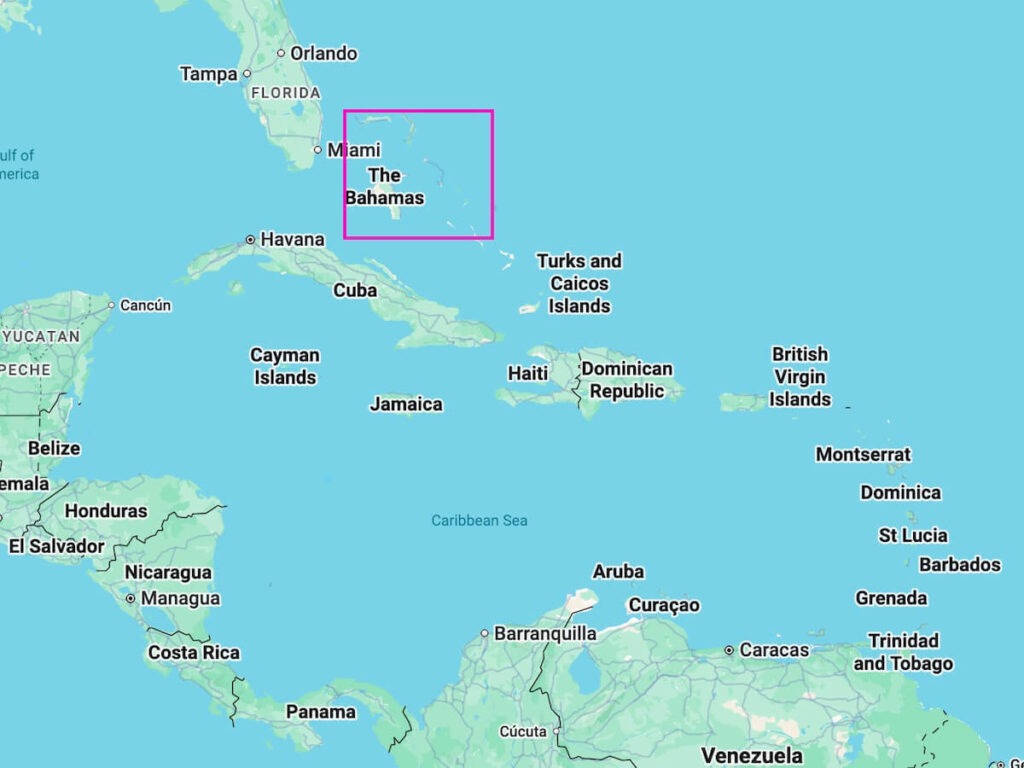
Aruba sits approximately 1,500 miles to the southeast of Nassau, off the coast of Venezuela in the southern Caribbean… a completely different part of the Atlantic basin. The Bahamas sits less than 200 miles east of Florida. Aruba is 1,500 miles from Miami. This distance is the root of the biggest practical difference between these two destinations: proximity.
| Aruba | The Bahamas (Nassau) | |
|---|---|---|
| Region | Southern Caribbean | Atlantic / Northern Caribbean |
| Nearest Mainland | Venezuela (17 miles) | Florida (~180 miles) |
| Distance from Miami | ~1,500 miles | ~180 miles |
| Distance from Each Other | ~1,500 miles apart | — |
How Far is the Bahamas from Major US Cities?
The Bahamas is one of the closest Caribbean destinations to the United States, which is a significant practical advantage. Nassau’s Lynden Pindling International Airport (NAS) is the main gateway.
| Departure City | Approx. Flight Time to Nassau | Direct Flights? |
|---|---|---|
| Miami, FL | ~50 minutes | Yes |
| Fort Lauderdale, FL | ~1 hour | Yes |
| Atlanta, GA | ~2 hours | Yes |
| New York (JFK/EWR) | ~3 hours | Yes |
| Boston, MA | ~3.5 hours | Yes |
| Charlotte, NC | ~2.5 hours | Yes |
| Houston, TX | ~3 hours | Yes |
| Chicago, IL | ~3.5 hours | Yes |
The Exumas, Eleuthera, Harbour Island, and other Out Islands typically require a connection through Nassau or a short commuter flight (20–45 minutes from Nassau). Budget extra time and a domestic fare for these islands.
How Far is Aruba from Major US Cities?
| Departure City | Approx. Flight Time | Direct Flights? |
|---|---|---|
| Miami, FL | ~3 hours | Yes |
| Atlanta, GA | ~4 hours | Yes |
| New York (JFK/EWR) | ~4.5 hours | Yes |
| Boston, MA | ~5 hours | Yes |
| Charlotte, NC | ~4 hours | Yes |
| Houston, TX | ~4.5 hours | Yes |
| Chicago, IL | ~5.5 hours | Yes |
Nassau is one of the closest international destinations available to US travelers… closer than many domestic flights. For travelers in Florida, the Bahamas is almost impossibly convenient. Aruba requires a longer commitment of travel time from nearly every US city, typically 1.5 to 3 hours more each way. Getting to Aruba →
The Bahamas Is Not One Destination. It’s Several.
Before comparing anything else, it’s worth understanding that “the Bahamas” covers wildly different experiences depending on which islands you visit. The gap between Nassau and the Out Islands is as large as any two destinations in the Caribbean.
Nassau / Paradise Island
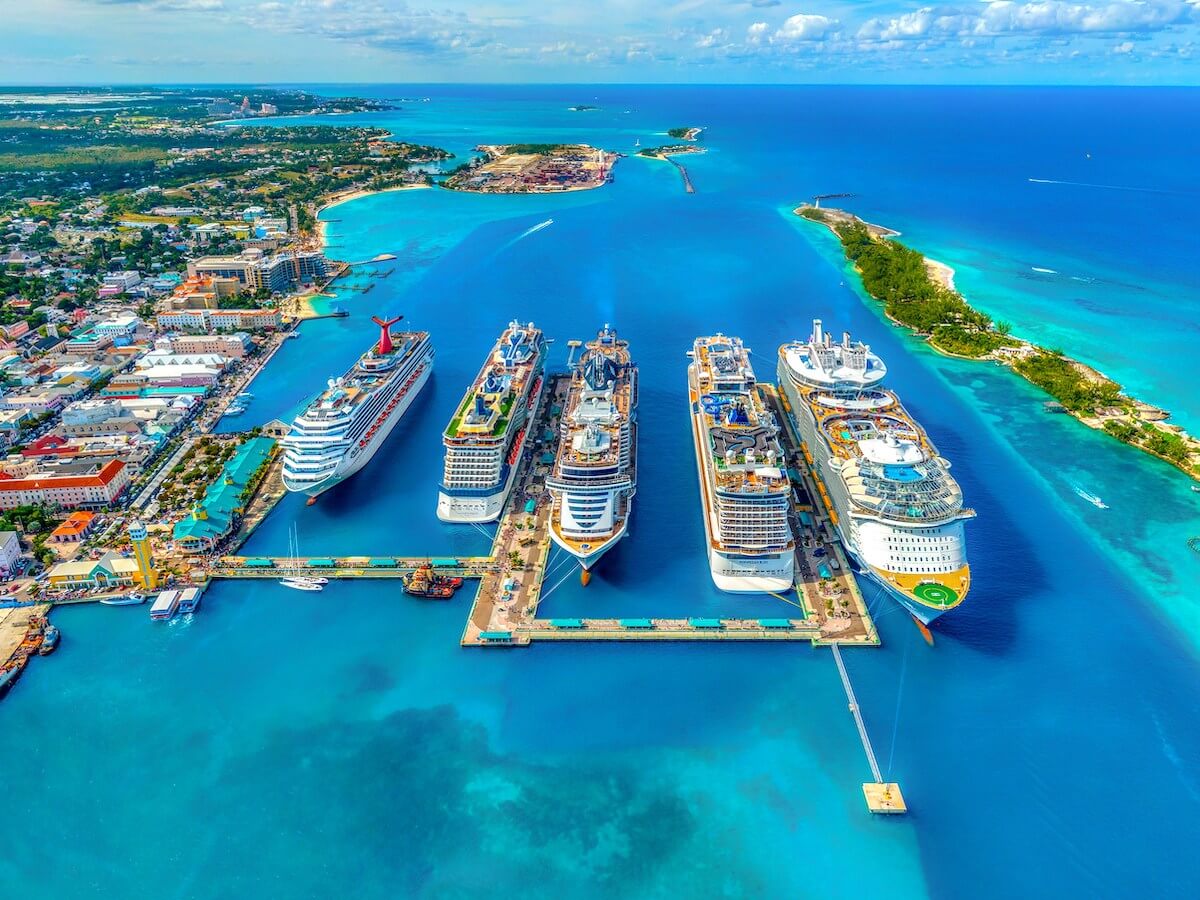
Urban, busy, and developed. Nassau is the capital city, a proper Caribbean city with traffic, cruise ship ports, casinos, a lively bar scene, and every major resort brand represented. Paradise Island, connected by bridge, is home to Atlantis, one of the Caribbean’s most famous mega-resorts, with a water park, casino, multiple hotels, marine habitat, and dolphin encounters.
This is a good choice for first-timers, families who want everything in one place, and travelers who like city energy alongside the beach.
The Exumas
365 cays stretching 100 miles into the Atlantic, and the most talked-about island chain in the Bahamas. The Exumas are where you find the swimming pigs of Big Major Cay, nurse sharks at Compass Cay, the James Bond-filmed Thunderball Grotto, endless sandbars, the luminous blue-green water that appears in every Bahamas photo you’ve ever seen, and a pace of life that feels genuinely remote.
Getting there requires a commuter flight or full-day boat from Nassau, but the Exumas routinely make “best beaches in the world” lists and are worth every logistical step.
Harbour Island / Eleuthera
Harbour Island (or “Briland” to regulars) is famous for its Pink Sands Beach, where a combination of coral and shell fragments tints the sand a soft rose-pink. It’s tiny, quiet, golf-cart-only, and one of the most charming places in the entire Caribbean. Eleuthera is a long, narrow island with dramatic Glass Window Bridge (where Atlantic and Caribbean waters meet) and a laid-back, surf-friendly vibe.
The Abacos
Sailors’ paradise. A string of cays with calm “Sea of Abaco” water between them, beloved for sailing, boating, fishing, and small-town Bahamian charm. Still recovering in some areas from Hurricane Dorian (2019).
For this comparison, we’ll primarily focus on Nassau/Paradise Island and the Exumas, since those represent the two most commonly considered Bahamas experiences when travelers are comparing against Aruba.
Beaches
Aruba
Aruba’s beaches set a high standard for consistency. The western coast delivers calm, clear, turquoise water virtually every day of the year, sheltered by the same trade winds that keep the island breezy without being rough.
Eagle Beach, wide, uncrowded, framed by the iconic divi-divi trees, is regularly ranked among the best beaches in the world. Palm Beach offers a livelier, resort-bar atmosphere. Baby Beach is a calm, sheltered lagoon ideal for families. Malmok and Mangel Halto are snorkeler favorites. From one end of the island to the other, Aruba’s beaches are remarkably reliable.
The Bahamas
The Bahamas’ best beaches range from very good to genuinely jaw-dropping, but the quality varies more than Aruba’s. Nassau’s beaches, like Cable Beach, Junkanoo Beach, are pleasant and easily accessible but are not in Aruba’s league for sand and water quality.
The beaches of the Exumas, particularly around the cays and sandbars, are stunning. We’re talking surreal blues and translucent shallows that photograph like nothing else. Harbour Island’s Pink Sands Beach is one of the most photographed beaches in the Caribbean, with sand that glows pink in the afternoon light. These experiences are extraordinary but require additional travel from Nassau.
While we’ve talked about them at a high level, let’s note specific Bahamas beach experiences worth knowing about before you book.
- Cable Beach (Nassau): A long, accessible beach near the Baha Mar resort complex. Beautiful and well-developed with beach bars and water sports. Good but not exceptional by Caribbean standards.
- Cabbage Beach (Paradise Island): The beach adjacent to Atlantis. Stunning water, lively atmosphere, lots of people. A very good beach but crowded near the resort.
- Pink Sands Beach (Harbour Island): Three miles of blush-pink sand with calm, shallow water. One of the Caribbean’s most distinctive and beautiful beaches, but it requires a ferry and taxi from Nassau to reach.
- Exuma Cays sandbars: The sandbars that emerge in the middle of the ocean between cays during low tide are some of the most photographed places in the Bahamas. Brilliant blue water in every direction, warm and shallow. Accessible only by boat tour.
- Tropic of Cancer Beach (Exuma): A half-mile beach exactly on the Tropic of Cancer line, marked with a painted stone, with perfectly white sand and calm, glassy water.
For more on Aruba’s beaches, see our full Aruba beaches guide →
Winner
Aruba wins on consistency and ease of access. Excellent beaches are a short taxi ride from anywhere on the island. The Bahamas wins on peak uniqueness. The pink sand of Harbour Island and the aquamarine cays of the Exumas are genuinely singular experiences that Aruba can’t replicate. For pure reliability, Aruba. For the most unforgettable single beach moment, the Bahamas’ Out Islands have an edge.
Weather & Hurricane Risk
This is Aruba’s biggest practical advantage over the Bahamas… and it’s a meaningful one.
Aruba
Aruba sits outside the hurricane belt, just 18 miles off Venezuela. Less than 20 inches of rain per year. Over 300 sunny days annually. Consistent trade winds keep temperatures around 82°F (28°C) without oppressive humidity. You can book Aruba in August, September, or October with complete confidence. There is no hurricane risk to plan around. Weather in Aruba → | Hurricanes in Aruba →
The Bahamas
The Bahamas sits firmly in the hurricane belt. Nassau and the northern islands are exposed to Atlantic storm systems from June through November, and the archipelago has taken catastrophic direct hits. Hurricane Dorian in 2019 devastated the Abacos and Grand Bahama Island with 185 mph winds, the strongest landfalling Atlantic hurricane in recorded history.
The central and southern Bahamas (Exumas, Eleuthera) generally see less direct impact but are not immune. Even without a direct hit, summer and fall visits to Nassau and the northern Bahamas carry real weather uncertainty.
| Aruba | The Bahamas | |
|---|---|---|
| Annual Rainfall | ~18 inches | ~50 inches (Nassau) |
| Hurricane Risk | Extremely low (outside belt) | Moderate to high (inside belt) |
| Best Travel Window | Year-round | December–April |
| Summer / Fall Risk | Virtually none | Significant hurricane exposure |
| Avg. Temp | 82°F / 28°C | 75–90°F / 24–32°C |
Winner
Aruba, clearly. If you’re traveling between June and November, Aruba is the dramatically more reliable choice.
Safety
This comparison deserves honesty, because one island carries Level 1 advisory and the other a Level 2, but the nature and distribution of risk is quite different between them.
Aruba
Aruba holds a US State Department Level 1 travel advisory, “Exercise Normal Precautions.” Violent crime against tourists is rare. Petty theft is uncommon. You can rent a car, explore independently, walk at night, and generally move around without meaningful concern. It is one of the safest destinations in the entire Caribbean. Safety in Aruba →
The Bahamas
The Bahamas currently holds a Level 2 advisory, “Exercise Increased Caution”, reissued as recently as March 31, 2025, specifically citing crime, water-related safety risks, and strict firearms laws.
The advisory is clear that violent crime, like armed robberies, burglaries, and sexual assaults, can occur anywhere in the Bahamas, with most incidents concentrated in Nassau and Freeport on New Providence and Grand Bahama. The “Over the Hill” area of Nassau, south of Shirley Street, is specifically flagged for gang-related violence. Vacation rental properties without private security are noted as higher-risk environments.
The State Department also issued specific water safety warnings: boating in the Bahamas is poorly regulated, injuries and deaths have occurred, and sexual assaults by jet ski operators on New Providence and Paradise Island have been reported (to the extent that US Embassy employees are prohibited from using independent jet ski operators on those islands).
The firearms warning also applies in the Bahamas, exactly as in Turks and Caicos. Firearms and ammunition are illegal in the Bahamas, and authorities have detained US citizens for several days or more after finding firearms or ammunition in luggage, preventing them from leaving. Check every bag carefully before departure.
The Exumas, Eleuthera, Harbour Island, and most Out Islands have significantly lower crime rates than Nassau and Freeport. Travelers visiting those areas face a meaningfully different risk profile than those in Nassau. And the resort zones of Nassau, like Paradise Island and Cable Beach, are better-secured environments than the broader city. The advisory reflects the full country, not every island equally.
Winner
Aruba, clearly. A Level 1 vs. Level 2 gap is meaningful, and the specific risks called out in the Bahamas advisory such as gang violence, assault, and unregulated water activities, represent real considerations that don’t exist in Aruba.
Cost
Bahamas
The Bahamas has wide variation in cost depending on where you go, which makes this comparison more nuanced than a simple winner/loser.
Nassau/Paradise Island sits in a similar price range to Aruba for mid-range travelers, but with more extremes in both directions. Budget hotels start around $90–$150 per night. Mid-range resorts on Cable Beach or Paradise Island run $250–$500. Atlantis and the ultra-luxury Baha Mar properties (Rosewood, SLS, Grand Hyatt) can run $600–$1,400+ per night in peak season. Dining is expensive — groceries run 30–50% above US prices due to import duties averaging 35–45%. Car rentals run $80–$120 per day.
The Out Islands (Exumas, Harbour Island) are often more expensive than Nassau with limited supply, high demand, and logistical costs push prices up. Private villas on Harbour Island regularly run $500–$1,500 per night. A day trip from Nassau to the Exumas via small plane and boat tour runs $400–$600 per person. The exclusive Out Island resorts (Fowl Cay, Kamalame Cay, Grand Isle Resort Exuma) are among the most expensive properties in the Caribbean.
Aruba
Aruba is mid-range and more predictable. Mid-range hotels run $300–$500. There are genuine budget options, and dining has accessible price points alongside fine dining, and costs are less extreme than either end of the Bahamas spectrum. Cost of visiting Aruba →
| Expense | Aruba | Nassau / Paradise Island | Out Islands (Exumas, Harbour Is.) |
|---|---|---|---|
| Budget hotel/night | $120–$200 | $90–$165 | $200–$350 |
| Mid-range hotel/night | $300–$500 | $250–$500 | $400–$800 |
| Luxury hotel/night | $500–$1,000+ | $600–$1,400+ | $800–$2,500+ |
| Casual meal (per person) | $15–$35 | $20–$45 | $25–$55 |
| Rental car/day | $45–$80 | $80–$120 | Limited availability |
| Day trip to Exumas from Nassau | N/A | $400–$600 per person | N/A |
Winner
Nassau has a slight budget edge over Aruba. Out Islands are generally more expensive. Overall, Aruba is more predictable and mid-range consistent.
Unique Experiences & Activities
This is where the Bahamas earns its most passionate advocates, and where the gap with Aruba is strongest.
The Bahamas’ Standout Experiences
Swimming pigs of the Exumas
Big Major Cay, also called Pig Beach, is home to roughly 20 pigs and piglets who wade into the water to greet boats. How they got there is disputed (sailors who abandoned them? a nearby shipwreck?), but they’ve become one of the Caribbean’s most iconic bucket-list experiences.
Most visitors access them via day trip from Nassau (small plane, ~30 minutes, then a boat tour) or by staying on Great Exuma. Tours typically combine the pigs with nurse sharks at Compass Cay, iguana feeding at Bitter Guana Cay, snorkeling the Thunderball Grotto (yes, the James Bond film location), and a sandbar lunch stop. There is nothing like it anywhere in Aruba or the rest of the Caribbean.
Check out this tour to swim with the pigs in the Bahamas!
Atlantis Resort, Paradise Island
Love it or find it excessive, Atlantis is genuinely extraordinary as a mega-resort. The Aquaventure water park spans 141 acres with 20+ waterslides, rivers, pools, and private beaches. The Atlantis marine habitat is the world’s largest open-air aquarium. Dolphin Cay offers dolphin and sea lion encounters.
There’s a casino, 40+ restaurants and bars, and day passes available for non-guests. As a single destination resort it is arguably without equal in the Caribbean.
Pink Sands Beach, Harbour Island
The sand really is pink, a blush caused by crushed coral and shells mixing with the white, and it stretches for three miles with virtually no development in sight. Harbour Island is golf-cart-only, boutique-hotel-dominated, and one of the most charming small places in the Caribbean. Getting there from Nassau requires a ferry and taxi, which keeps the crowds manageable.
Thunderball Grotto, Staniel Cay
An underwater cave system that appears above the waterline as a rocky island, accessible by swimming through submerged openings into a cathedral-like cavern lit by shafts of sunlight from holes in the ceiling. Used as a filming location for two James Bond films. Completely extraordinary.
Baha Mar Complex
Three resort hotels (Rosewood, SLS, Grand Hyatt) connected by the largest casino in the Caribbean, a waterpark, a golf course, and an enormous array of dining. One of the newest and most ambitious resort developments in the Caribbean.
Nassau’s History and Culture
Fort Fincastle, the Queen’s Staircase, the Junkanoo cultural center, the straw markets, the colonial architecture of Bay Street… Nassau has genuine history and character that goes beyond beach resorts.
Aruba’s Standout Experiences
- Off-road tours through Arikok National Park: Rugged, dramatic terrain with natural pools, cave paintings, and remote coastline accessible only by 4×4
- Flamingo encounter at Renaissance Island: Feeding and photographing Caribbean flamingos on a private island beach. There is no equivalent in the Bahamas.
- Antilla shipwreck diving: One of the largest wrecks in the Caribbean
- Sunset cruises, submarine tours, and parasailing
- Windsurfing and kitesurfing: World-class conditions driven by Aruba’s consistent trade winds
- Casinos at multiple resort properties with real variety
- Animal encounters: Donkey Sanctuary, Butterfly Farm, Ostrich Farm
- Nightlife along the Palm Beach strip
Winner
The Bahamas on unique bucket-list experiences, like the swimming pigs and Thunderball Grotto alone are genuinely singular. Aruba on overall activity variety and ease of access for non-water activities.
Where to Stay
Aruba
Aruba offers a full range from budget-friendly guesthouses and hostels to five-star luxury. The Palm Beach high-rise zone features large resort hotels, like Marriott, Riu, Holiday Inn, with easy walkability to dining and bars.
The Eagle Beach low-rise zone is quieter and home to the celebrated Bucuti & Tara Beach Resort, one of TripAdvisor’s most consistently top-rated hotels in the Caribbean. All-inclusive options include Divi & Tamarijn and Riu Palace. Full guide to where to stay →
Bahamas
Nassau / Paradise Island is dominated by big resort brands at the higher end, like Atlantis (multiple hotel towers at various price points), Baha Mar (Rosewood, SLS, Grand Hyatt), the Four Seasons Ocean Club, and Sandals Royal Bahamian. Mid-range options exist along Cable Beach and in Nassau proper. Budget-conscious travelers can find decent options in Nassau City. Vacation rentals via Airbnb and VRBO are popular alternatives.
Out Islands have a completely different character. Think small boutique resorts, eco-lodges, private villa rentals, and a handful of exceptionally exclusive properties (Kamalame Cay, Fowl Cay, Tiamo Resort). These are among the most luxurious and isolated properties in the Caribbean. They’re also among the most expensive and logistically complex to reach.
Families & Kids
Both destinations have excellent family options, but serve different family styles.
Aruba
Aruba is ideal for independent family travel: Calm swimming, family-specific activities including water parks, animal encounters, submarine tours, and the famous flamingo beach, all in a safe and easy-to-navigate environment.
Bahamas
Nassau with Atlantis is arguably the Caribbean’s premier family mega-resort destination. The water park, marine encounters, and sheer scale of the property are purpose-built for families. A trip to the Exumas to see the swimming pigs is also a uniquely memorable family experience that no other Caribbean island can offer.
Winner
Tie. Aruba for independent family travel with safety and variety. Nassau/Atlantis for families who want a self-contained mega-resort experience. The Exumas for families with older kids wanting a genuine adventure.
Aruba vs. the Bahamas: Which Is Better for You?
Choose Aruba If
- Weather reliability is a priority, especially outside peak winter season.
- Safety is a top concern, particularly for independent travel.
- You want to explore freely, rent a car, wander at night, dine around the island.
- Consistent beach quality matters more than once-in-a-lifetime beach moments.
- You want variety of activities beyond the beach, like off-road, nightlife, casinos, animal encounters.
- You’re a first-time international traveler wanting a reliable, high-reward destination.
- You want a polished, resort-calibrated vacation without logistical complexity.
- Windsurfing, kitesurfing, or wreck diving are priorities.
Choose the Bahamas If
- You’re flying from Florida or the US East Coast and want minimal travel time.
- The swimming pigs, Thunderball Grotto, or Exuma Cays are bucket-list items.
- Atlantis on Paradise Island is an experience your family or group specifically wants.
- Pink Sands Beach on Harbour Island is on your list.
- You want variety across multiple very different island experiences in one trip.
- Proximity to the US for a short getaway (even a long weekend) is important.
- You’re interested in an ultra-luxury private Out Island escape.
- Nassau’s history, culture, and nightlife appeal alongside the beach.
Frequently Asked Questions
Aruba is safer. Aruba holds a US State Department Level 1 travel advisory (Exercise Normal Precautions), the lowest possible designation. The Bahamas holds a Level 2 (Exercise Increased Caution) due to violent crime, water-safety risks, and strict firearms laws, reissued as recently as March 2025. Crime is most concentrated in Nassau and Freeport. The Out Islands have lower risk. Aruba’s safety record is more uniformly excellent across the entire island. Safety in Aruba →
It depends which Bahamas you’re comparing. Nassau mid-range is slightly more affordable than Aruba. The Out Islands (Exumas, Harbour Island) are significantly more expensive, between logistics costs, boutique property pricing, and day-trip expenses, an Out Islands trip can cost considerably more than Aruba. Aruba is the most predictable and mid-range consistent of the three.
Yes. The Bahamas sits in the Atlantic hurricane belt and is exposed to storm systems from June through November. Hurricane Dorian devastated the northern Bahamas in 2019 as the strongest landfalling Atlantic hurricane ever recorded. Aruba sits outside the hurricane belt entirely with essentially no storm risk year-round. Aruba hurricane guide →
Yes, the most popular way to see the Exumas swimming pigs is via a day trip from Nassau. A small plane flight takes about 30 minutes from Nassau to the Exumas, followed by a full-day boat tour covering pigs, nurse sharks, iguanas, the Thunderball Grotto, and sandbar stops. Expect to pay $400–$600 per person for a quality day-trip package. You can also stay in the Exumas directly and access the pigs locally.
No, and this warning deserves emphasis. Firearms and ammunition are illegal in the Bahamas, including small quantities brought by mistake in carry-on bags or luggage, and police strictly enforce these laws even at the airport when travelers are leaving. US citizens who own firearms should check every bag thoroughly before departure.
Aruba wins on consistency. There are excellent beaches from one end of the island to the other, all easily accessible. The Bahamas wins on peak uniqueness. The Pink Sands of Harbour Island and the turquoise cay sandbars of the Exumas are experiences Aruba can’t match. If your definition of “best beach” is the most consistently beautiful and swimmable, Aruba. If it’s the single most extraordinary and unusual beach moment, the Bahamas Out Islands.
Nassau is roughly 180 miles east of Miami, about a 50-minute flight. This makes the Bahamas one of the closest international destinations available to US travelers, particularly those on the East Coast and in the Southeast. Aruba is approximately 1,500 miles from Miami, about a 3-hour flight.
Aruba is excellent year-round. There is genuinely no bad season. The Bahamas is best visited December through April during the dry season and outside of hurricane risk. Summer and fall visits to the Bahamas, particularly Nassau and the northern islands, carry real weather uncertainty that simply doesn’t exist with Aruba.
Ready to Plan Your Aruba Trip?
If Aruba has won you over, everything you need is right here:
- Where to Stay in Aruba: From budget picks to beachfront luxury
- All-Inclusive Resorts in Aruba: The best fully-inclusive options
- What to Do in Aruba: Beaches, tours, adventures, water sports
- Where to Eat in Aruba: The best restaurants for every budget
- Safety in Aruba: What to know before you go
- Weather in Aruba: Why Aruba’s weather is its secret weapon
- Cost of Visiting Aruba: How to budget your trip
- First-Time Visitor Tips: Everything you need before your first trip
Still Comparing?
See how Aruba compares to all the top Caribbean destinations in our complete comparison guide.